Affichage des articles dont le libellé est Etiquetado. Afficher tous les articles

17/05/2021

USA - Amazon’s New Compliance Requirements for Dietary Supplement Listings to Ensure Greater Transparency and Quality for Consumers


As one of the largest channels facilitating the purchase and sale of dietary supplements, Amazon has often faced criticism for its lack of oversight and failure to take action to restrict the sale of supplements on its platform which are illegal, misbranded, adulterated, or otherwise dangerous for consumers. In response, Amazon recently updated its dietary supplement policy to impose additional obligations on dietary supplement sellers to ensure that products marketed on its platform are safe for consumers and are manufactured and labeled in compliance with Food & Drug Administration (“FDA”) regulations.

While Amazon’s existing policy requires that any dietary supplements listed on its platform conform to certain parameters (for example, no products may be listed which have been identified in an FDA Warning Letter as adulterated or misbranded), the new policy places affirmative reporting obligations on sellers. Specifically, the new policy requires that for each dietary supplement product, manufacturers must submit for Amazon’s approval: (i) either a Certificate of Analysis (COA) from an ISO/EIC 17025 accredited laboratory, a COA from an in-house laboratory that is compliant with current good manufacturing practices (“cGMPs”), or evidence of product enrollment in an Independent Quality Certification Program such as NSF Certified for Sport®, BSCG Certified Drug Free®, or the USP Dietary Supplement Verification Program; and (ii) product images which clearly show the entirety of the product label and contain the name and contact information of the brand owner or manufacturer. The COA requirement applies to finished dietary supplement products, with additional obligations for herbal supplements. For example, for herbal supplements which declare quantified plant constituents on their Supplement Facts panel, COAs must be submitted for each dietary ingredient.

The new policy also requires dietary supplement sellers to provide Amazon with a Letter of Guarantee issued on official brand letterhead providing assurances that (i) the product was manufactured under cGMPs, (ii) only lawful and safe ingredients are utilized in the product, and (iii) the concentration of active ingredients as stated on the label is safe for consumption. These new obligations apply to both new product listings as well as existing products which have already been listed for sale on Amazon, with a compliance deadline of May 31, 2021 for existing product listings. Accordingly, any sellers with existing dietary supplement product listings must submit the required documentation and obtain approval of their listings by May 31, 2021. The stated penalties for failure to provide the newly required information include removal of product listings, suspension of the seller’s ability to add new products or list products, a withholding of payments due to the seller, and/or potential additional legal action.

It is therefore especially critical that dietary supplement brands selling on Amazon are promptly taking steps to comply with the new policy and properly managing their quality obligations to ensure that their products are being manufactured in accordance with cGMPs, and are strongly advised to have detailed agreements in place with manufacturers which clearly spell out their respective quality and compliance responsibilities.


02/02/2021

"Food & Beverage Litigation Update - January 2021" by Mark Anstoetter et al.


USDA Releases Final Rule on Hemp Cultivation

The U.S. Department of Agriculture has released its final rule governing the cultivation of hemp, which will take effect March 22, 2021. The draft rule would have required hemp to be shown to contain less than 0.3% tetrahydrocannibanol (THC) on testing conducted within 15 days of harvest, a proposal that drew criticism from several parties. The final rule reduces some of the requirements, such as allowing 30 days to test and raising the negligence threshold to 1% rather than 0.5%. The rule also allows some flexibility for states to develop testing methods that take into account variables such as regional environmental factors.


UK Opens Consultation on GE Foods

The U.K. Department for Environment, Food & Rural Affairs (Defra) has opened a consultation on the regulation of genetic technologies in food. “It mainly focuses on the regulation of gene edited (GE) organisms possessing genetic changes which could have been introduced by traditional breeding,” the consultation states. “[W]e are using this opportunity to engage separately and start gathering views on the wider regulatory framework governing genetically modified organisms (GMOs).”

“EU legislation controlling the use of GMOs was retained in the UK at the end of the transition period (after 31 December 2020). This retained legislation requires that all GE organisms are classified as GMOs irrespective of whether they could be produced by traditional breeding methods. Defra’s view is that organisms produced by GE or by other genetic technologies should not be regulated as GMOs if they could have been produced by traditional breeding methods. Leaving the EU provides an opportunity to consult on the implications of addressing this issue. We recognise there is a spectrum of opinions on these topics, and we are consulting to provide an opportunity for all views to be shared.”

Poultry Processing Speeds Executive Order Withdrawn

President Biden has withdrawn an executive order that would have allowed 25% faster processing speeds on poultry lines in meatpacking plants. The policy change would have allowed plants to process 175 slaughtered birds per minute, up from 140, in accordance with a proposal by the U.S. Department of Agriculture’s Food Safety and Inspection Service. Criticism of the proposal came from advocacy groups that argued the faster speeds with endanger workers, especially after a study purportedly showed that plants with waivers allowing the faster speeds had higher COVID-19 transmission rates.

California Files Prop. 65 Action Against Seafood Cos.

California Attorney General Xavier Becerra filed a lawsuit against five importers, wholesalers and distributors of seafood, alleging they sell fish with levels of cadmium and lead high enough to require warnings governed by the Safe Drinking Water and Toxic Enforcement Act (Prop. 65). California v. Pacific Am. Fish Co. Inc. (Cal. Super. Ct., filed December 28, 2020). The companies—Pacific American Fish Company, Rhee Bros., Seaquest Seafood Corporation, Jayone Foods and Clearwater Seafoods—sell products such as clams, mussels, octopus, oysters, squids and snails.

“When California’s consumers, restaurants, and supermarkets purchase seafood, they shouldn’t have to worry about whether the products they’re buying contain toxic chemicals,” Becerra said in a press release. “The seafood industry has a responsibility to ensure the safety of its products – and to warn consumers of any risks. I hope this lawsuit serves as a warning to any company that might skirt its responsibilities under Proposition 65. The California Department of Justice will hold you accountable.”


Consumers Challenge Tuna Content in Subway Tuna Sandwiches

A putative class action has alleged that Subway Restaurants Inc. sells tuna products that “do not contain any tuna nor have any ingredient that constitutes tuna”—the products “are completely bereft of tuna as an ingredient,” according to the complaint. Dhanowa v. Subway Restaurants Inc., No. 21-0498 (N.D. Cal., filed January 21, 2021). “As independent testing has repeatedly affirmed, the Products are made from anything but tuna,” the complaint asserts. “On the contrary, the Products are made from a mixture of various concoctions that do not constitute tuna, yet have been blended together by Defendants to imitate the appearance of tuna. Defendants identified, labeled and advertised the Products as ‘tuna’ to consumers, when in fact they were not tuna. Yet, Defendants have systematically and consistently continued to label and advertise the Products as ‘tuna.'” The complaint does not note what the Subway products are purportedly composed of if not tuna. The plaintiffs allege violations of California’s consumer-protection statutes as well as fraud, misrepresentation and unjust enrichment.


“Icelandic Skyr” Misleadingly Made in New York, Consumers Allege

Two consumers have filed a putative class action alleging that Icelandic Provisions Inc.’s skyr cultured dairy product is misleadingly marketed as made in Iceland despite being produced in New York. Mantini v. Icelandic Provisions, Inc., No. 21-0618 (S.D.N.Y., filed January 23, 2021). The packaging for the skyr, which features the text “Traditional Icelandic Skyr” and photos of an Icelandic countryside, “gives consumers the belief it is made in Iceland,” the complaint asserts. Although the back of the package indicates that the product is “made in Batavia, NY with domestic and imported ingredients,” the plaintiffs allege they “relied upon the representations and indications of the Product’s origins – literally and figuratively – in Iceland, and desired to purchase such a product.” Alleging fraud, negligent misrepresentation, unjust enrichment and violation of Pennsylvania’s consumer-protection statute, the plaintiffs seek class certification, injunctive relief, damages, costs and attorney’s fees.


16/04/2020

USA - TTB Publishes Final Rule Modernizing Labeling and Advertising Regulations for Alcoholic Beverages

  • On April 2, 2020, the Alcohol and Tobacco Tax and Trade Bureau (TTB) issued a final rule, which modernizes labeling and advertising regulations for wine, distilled spirits, and malt beverages.  The final rule is effective May 4, 2020.
  • The final rule gives companies flexibility on the placement of mandatory information on distilled spirits labels.  The final rule will allow information, like brand name, class and type of the distilled spirit, alcohol content, and net contents (for containers that do not meet a standard of fill) to appear anywhere on the label, as long as all mandatory information can be viewed simultaneously, without the need to turn the container.
  • The rule also amended regulations that govern specific distilled spirits, like Tequila and Vodka.  For example, the rule created, within the standards of identity, a class called “Agave Spirits,” and two types within that class: “Tequila” and “Mezcal.” Previously, regulations provided a standard for only “Tequila.”  TTB believes that the creation of the ‘‘Agave Spirits’’ class will provide more information to consumers and will allow industry flexibility when labeling products that are distilled from agave.  In regard to Vodka, TTB removed the requirement that vodka be without distinctive character, aroma, taste, or color.
  • TTB’s final rule also affects malt beverages, like beer.  Previously, TTB prohibited “strength claims” on beer labels and in beer advertisements; however, TTB will now authorize such labeling and advertising.  As such, the use of words like “strong,” “full strength,” and “extra strength” will now be allowed.  Per this final rule, TTB will also now allow “other truthful, accurate, and specific factual representations of alcohol content, such as alcohol by weight” to “appear on the label, as long as they appear together with, and as part of, the statement of alcohol content as a percentage of alcohol by volume.”  Thus, brewers will be able to use the same label in states that require alcohol content to be stated as a percentage of alcohol by weight, and in other states that neither require nor prohibit alcohol by weight statements.

W

23/10/2019

Spanish Translation Guide for Pesticide Labeling (USA)


By Heather F. Collins, M.S.

On October 17, 2019, the U.S. Environmental Protection Agency (EPA) released the Spanish Translation Guide for Pesticide Labeling [ https://www.epa.gov/pesticide-labels/spanish-translation-guide-pesticide-labeling ] resource for use by all, including pesticide registrants that choose to display parts of their pesticide product label in Spanish.  The purpose of the guide is to be a resource for the translation of the health and safety sections on pesticide labeling from English to Spanish.  EPA states that the “guide is written in a universal form of Spanish to reach as many Spanish speakers as possible.”
While translating pesticide labels is not a requirement, EPA generally allows pesticide registrants to translate their product labels into any language so long as there is an EPA-accepted English version of the label and the translation is true and accurate.  The guide is not intended to substitute for or eliminate the pesticide labels in English. An English version of all required labeling text is needed for all pesticide products in accordance with 40 C.F.R. Section 156.10(a)(3).
The guide provides translations for standard language typically used in the health and safety sections of pesticide product labels such as the:
  • First aid and precautionary statement label language;
  • Signal words;
  • Misuse statements;
  • Storage and pesticide container disposal instructions;
  • Personal protection equipment label statements; and
  • Worker Protection Standard agricultural use requirements.
EPA states that it “developed the Spanish translation guide in response to feedback from stakeholders who believe that having bilingual pesticide labeling is critical to the well-being of pesticide handlers, applicators, and farmworkers, many of whom do not speak English as a first language.”
The English statement appears in the left-hand column and the corresponding Spanish translation is available in the right-hand column of the guide.  EPA states that the “guide will help registrants maintain accurate, consistent translations on product labels and ease their burden when adding Spanish translations.”

25/09/2019

🐸 Jorge Andrés Velásquez Guevara, “Efectos de la adopción del sello Rainforest Alliance en la competitividad del sector cacaotero en el mercado internacional”.


Universitaria Agustiniana, Bogotá (2019) 60 pp. 

Resumen

El propósito de esta investigación es establecer los impactos en la competitividad del sector cacaotero al estar certificado con el sello Rainforest Alliance, adicional se examinó el ámbito internacional donde el sello hace presencia y analizar sus ventajas y obstáculos. Para realizar este documento se tomó como soporte la recopilación documental, ya que la información se ha obtenido de fuentes secundarias como documentos, libros o investigaciones, donde se identificó la existencia del sello, en un pequeño sector cacaotero en Colombia, por un corto periodo, a pesar de cumplir con los requisitos y ser otorgada la certificación, no obtuvieron uno de los benéficos esperados, el de vender su producto a mercados extranjeros, el cual demandaba grandes cantidades de cacao certificado, y obtener premios en el precio del 5% al 15%. Pero la producción no cumplió las cantidades exigidas. Caso contrario del mercado mundial, donde el sello ha mostrado beneficios a los cultivadores certificados, como Costa de Marfil que actualmente es el mayor productor mundial de cacao certificado, según Rainforest Alliance en 2012, las fincas de cacao con el sello en este país, produjeron 40 % más cacao por hectárea que las fincas no certificadas, adicional los ingresos netos amentaron casi cuatro veces.


09/05/2019

Key Provisions Of USDA's Bioengineered Food Disclosure Rule

Arent Fox - https://www.arentfox.com/


On December 21, 2019, the U.S. Department of Agriculture (USDA) Agricultural Marketing Service (AMS or Agency) issued its final rule establishing a National Bioengineered (BE) Food Disclosure Standard (NBFDS). The rule implements amendments to the Agricultural Marketing Act made by Public Law 114-216 on July 29, 2016 (the Act) and follows an initial request for comment by AMS on June 28, 2017 and publication of a proposed rule on May 4, 2018. This two-part article summarizes key provisions of this new federal marketing standard, including the Agency’s approach to defining “bioengineered foods” and addressing refined ingredients, voluntary labeling, absence claims, and the applicable disclosure threshold. Part 1 discussed compliance deadlines, responsible parties, definitions, AMS’ list of bioengineered foods, and exemptions from the rule. In this Part 2, we’ll cover disclosure options, voluntary disclosure, absence claims, administrative issues, and enforcement.
Mandatory Disclosure
The rule incorporates the four disclosure options provided in the Act: text, symbol, electronic or digital link, and text message. The BE disclosure must appear on the information panel or the principal display panel of the product label, or on an alternate label panel if those panels contain insufficient space.
  1. Text Disclosure. For a BE raw agricultural commodity or an ingredient produced from that commodity, the text disclosure is “bioengineered food.” For a multi-ingredient food that contains both BE ingredients and non-BE ingredients, the text disclosure is “contains a bioengineered food ingredient.”
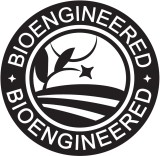
  2. Disclosure Via SymbolRegulated entities seeking to use a symbol may use a black and white or color version of the following, which includes the word “bioengineered” in an effort to provide more information to consumers in a way that is appropriate and non-disparaging:
  1. Disclosure Via Electronic/Digital LinkRegulated entities choosing to disclose BE content using the electronic or digital link option must accompany the link with the statement “Scan here for more food information” (or equivalent language that reflects technological changes) along with a telephone number and clear calling instructions, i.e., “Call [1-000-000-0000] for more food information,” in close proximity to the link. The telephone disclosure must be available at all times of the day and clearly provide BE food information to the caller. Prerecorded information is permitted. The electronic or digital link must provide the bioengineering disclosure on the first product information page accessed through the link, without any marketing and promotional information.
  2. Disclosure Via Text MessageRegulated entities that choose this option are required to include a statement on the package that instructs consumers on how to receive a text message. Those instructions can be shared or centralized among regulated entities, if so desired. Industry is not prohibited from developing a standardized instruction or response if it is in compliance with the NBFDS regulations.
The rule also provides options for disclosure in certain special cases:
  1. Additional Disclosure Options for Small Food ManufacturersAMS provides small food manufacturers, defined as a “food manufacturer with annual receipts of at least $2,500,000 but less than $10,000,000,” with two additional disclosure options for the product label: (1) a telephone number accompanied by appropriate language, e.g., “Call [1-000-000-0000] for more food information”; or (2) an Internet website address, e.g., a URL, with accompanying text, e.g., “Visit [URL of the website] for more food information.”
  2. Additional Disclosure Options for Small and Very Small Packages. For small and very small packages, defined using FDA’s labeling requirements, regulated entities can replace the statement “Scan here for more food information” associated with a link disclosure with the statement “Scan for info.” For the text message, entities can replace the statement “Text [number] for more bioengineered food information” with “Text [number] for info.” For very small packages, regulated entities may use a label’s preexisting URL or telephone number for disclosure.
  3. Disclosure for Food Sold in Bulk ContainersAMS holds retailers responsible for complying with the BE food disclosure for bulk food. The disclosure must appear on signage or other materials (stickers, bindings, etc.) on or near the bulk item. Entities can use any of the options for disclosure including text, symbol, electronic or digital link, or text message (if applicable).
In response to a comment requesting an alternative website disclosure option, AMS indicated that, while it does not have the authority to require such a disclosure, regulated entities are free to include BE disclosures on their websites.
Voluntary Disclosure
AMS agrees that voluntary BE disclosure is permissible under the Act, and the rule makes voluntary disclosure available to exempt entities and to foods in which rDNA material is not detectable but which are derived from BE crops or foods.
Entities that are otherwise exempt from the requirements of the NBFDS (very small food manufacturers, and restaurants and similar retail food establishments) may voluntarily provide disclosure of BE food that would otherwise be subject to disclosure under the NBFDS. In order to provide consistency with mandatory disclosure requirements and avoid consumer confusion, voluntary disclosure must be in one or more of the forms specified in the rule for mandatory disclosure (i.e., text, symbol, digital or electronic link, text message, or appropriate small manufacturer and small or very small package disclosure options, as applicable).
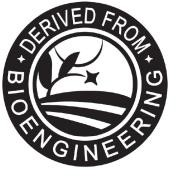
For those foods or food ingredients that (A) do not meet the definition of “bioengineered food,” (B) are not exempt from disclosure under the rule, and (C) are derived from a food on the List (described in Part 1), regulated entities may disclose such foods with one of the BE disclosure options described in the rule (text, symbol, electronic or digital link, text message, or appropriate small manufacturer and small or very small package disclosure options, as applicable). Such voluntary disclosures must state either that the food is “derived from bioengineering” or contains “ingredient(s) derived from a bioengineered source,” although “ingredient” may be replaced with the name of the specific BE crop or ingredient or may use the designated voluntary disclosure symbol.
Voluntary BE disclosure is prohibited for foods that are exempt from mandatory disclosure. For example, a regulated entity could not voluntarily disclose BE content for organic foods or for foods whose BE content falls below the 5 percent inadvertent presence threshold, or for foods that are derived from animals fed BE feed (and are not otherwise subject to disclosure).
Absence Claims
AMS received a number of comments with respect to claims regarding the absence of bioengineering in food. In response, AMS notes that while the NBFDS covers mandatory and voluntary BE and BE-derived claims, the Act does not provide authority for AMS to establish an absence claims regime as part of the NBFDS. AMS also notes that FDA and, for certain products, USDA’s Food Safety Inspection Service retain authority over absence claims and that “[e]ntities seeking to use absence claims should ensure that such claims are in compliance with all applicable Federal laws and regulations and are otherwise truthful and not misleading.” Finally, while foods certified under the National Organic Program are exempt from the BE disclosure requirement, AMS states that the Act does not give the Agency the “authority to establish or align the NBFDS with a non-GMO label.”
AMS acknowledges that entities may participate in voluntary labeling initiatives such as the non-GMO Project so long as they are in compliance with all applicable Federal laws and regulations. To the degree possible, USDA has tried to minimize the impact the NBFDS will have on these voluntary absence claims. AMS acknowledges that some elements of the NBFDS may differ from requirements of some existing voluntary marketing claims. The Agency also notes that it has adopted the statutory definition of “bioengineering,” thereby exempting from disclosure foods such as refined products that have undergone processes that remove modified genetic material.
Other Claims
AMS repeatedly states that nothing in the rule prohibits regulated entities from providing additional statements or other claims regarding BE foods and BE food ingredients provided such statements are consistent with all applicable laws and regulations.
Recordkeeping
The rule provides regulated entities with significant flexibility with respect to recordkeeping, requiring maintenance of records that are “customary or reasonable” to demonstrate compliance. Such entities must maintain records for at least two years beyond the date the product is sold or distributed for retail sale. Entities must respond to AMS requests for records by providing records within five (5) business days of the request, unless AMS extends the deadline. AMS will provide prior notice of at least three (3) business days in advance of on-site inspections. Entities must provide AMS access to facilities necessary for records examinations.
Enforcement
The rule provides a process for any interested person with knowledge of a possible violation to file a statement or complaint with AMS. AMS may enforce compliance through an investigation that includes records audits and examinations or similar activity, either on its own initiative or in response to a complaint from a third party. If the entity that is the subject of such an investigation objects to any findings made by AMS, it may request a hearing in accordance with the rule. If the entity subject to the investigation does not request a hearing, or at the conclusion of a hearing and any subsequent revision of the findings made by AMS, the Agency will make the summary of the final results of the investigation public. The decision to make that summary public constitutes final agency action for purposes of judicial review. AMS does not have authority to issue civil penalties for violations.
The published version of the final rule and preamble (63 pages) can be accessed here:
About The Author:
Karen Ellis Carr is a partner at Arent Fox. She focuses her food and agriculture practice on regulatory counseling and litigation related to products regulated by USDA, EPA, and FDA. Carr works on issues related to biotechnology and other agricultural technologies, pesticides, food safety, advertising, and labeling, and environmental law. In addition to her work with individual companies, Carr has represented a number of industry associations on development and coordination of regulatory strategy, in litigation, and on federal and state legislative issues. She has first- and second-chaired matters in state and federal trial and appellate courts throughout the country and in arbitration and mediation, and has experience in all phases of litigation from pre-litigation strategy and counseling to settlement negotiation and appeals.


28/01/2019

The spirit of the law: looking ahead to the future of alcohol labelling

http://www.osborneclarke.com/insights/spirit-law-looking-ahead-future-alcohol-labelling/#page=1


Alcohol labels have long benefited from exceptions to food labelling law but change may be coming. The European Commission and UK government are calling on industry to voluntarily comply with more general food labelling law. We discuss some of the proposals and the likely reaction from regulators.


16/01/2019

California Proceeds to Finalize Its Proposition 65 Exemption for Coffee


James M. Schurzjschurz@mofo.com ] and Robin Staffordrstafford@mofo.com ]


On January 9, 2019, the California Office of Environmental Health Hazard Assessment (OEHHA) took a further – and potentially final – step toward exempting coffee from Proposition 65 warnings.
As we reported in an earlier alert, on June 15, 2018, OEHHA issued a notice that it intended to adopt a new regulation that would create a specific exemption for exposures to acrylamide and other Proposition 65-listed chemicals that are in present in coffee as a result of roasting coffee beans.
Section 25249.6 of Proposition 65 requires businesses to provide clear and reasonable warnings before exposing consumers to any of nearly 1,000 chemicals that have been identified by California as causing cancer or reproductive toxicity. However, exposures that pose “no significant risk of cancer” are exempted from the warning requirement under section 25249.10 of the statute.
The regulation would establish as a matter of law that exposures to acrylamide and 14 other Proposition 65 chemicals, created when coffee beans are roasted, pose no significant risk of cancer, thereby exempting them from warnings:
§ 25704. Exposures to Listed Chemicals in Coffee Posing No Significant Risk

Exposures to listed chemicals in coffee created by and inherent in the processes of roasting coffee beans or brewing coffee do not pose a significant risk of cancer.

Public comments on the proposal closed on August 30, 2018. OEHHA has now completed its review and response to  comments, including multiple submissions from the Council for Education and Research on Toxics (CERT), a Proposition  65 plaintiff.

CERT is currently locked in a Proposition 65 enforcement battle with over 60 companies that roast, distribute, or sell coffee at retail, seeking civil penalties and Proposition 65 warnings about acrylamide in coffee. CERT also brought a separate action against OEHHA, challenging the legal and scientific validity of the proposed exemption. Both cases are currently pending in Los Angeles Superior Court.
OEHHA has now completed its review and response to public comments. On January 10, 2019, OEHHA submitted the regulation — with no change to the proposed language — along with its 160-page final statement of reasons to the Office of Administrative Law (OAL) for review.
OAL has until February 19, 2018 to approve the regulation, reject it, or request further information from OEHHA.


14/01/2019

D Young & Co LLP - Big squeeze on cheese: General Court tests HALLOUMI

Whilst the differences between the marks at issue in this case were a discerning factor, this case does highlight the difficulty to prove a certification mark can be seen by the general public as anything more than descriptive in relation to the goods it serves to certify.
The Republic of Cyprus (‘Cyprus’) has failed to successfully contest a European Union trade mark ( EUTM) on the basis of a certification mark for “HALLOUMI”.
This is a General Court (GC) decision following an appeal brought by Cyprus against M.J. Dairies EOOD’s EUTM application for the figurative mark (shown below) which covered a range of goods and services in Classes 29, 30 and 43, including cheese and related products:


Cyprus claimed a likelihood of confusion based initially on certification marks for HALLOUMI in the UK and Cyprus. The Opposition Division rejected the opposition and a subsequent appeal by Cyprus to the Board of Appeal, relying solely on the UK certification mark, was also dismissed.
The Board of Appeal concluded that the UK certification mark was weak in distinctive character and there was only limited similarity between the marks at issue. It set out that protection afforded to certification marks did not impose an additional requirement that the public must recognize it as a certification mark. Further, it held that the evidence submitted by Cyprus showed that the term “halloumi” was, at most, perceived on the market as designating a specific type of cheese only.
Cyprus appealed the decision further to the GC. Cyprus relied on a single plea of infringement of Article 8(1)(b) in relation to the UK certification mark only and claimed the Board of Appeal had erred by:
  • Finding the certification mark had weak distinctive character;
  • Incorrectly assessing the similarity of the marks;
  • Finding no likelihood of confusion as a result of an error in the analysis of the evidence filed.
In its decision, the GC set out that registration of a certification mark could be held to confer a certain level of distinctiveness. However, this did not mean a certification mark must be accorded an intrinsic distinctive character of such a level that would provide it with unconditional protection enabling opposition to any registration including that term.
The GC also confirmed that, unlike standard trade marks, the distinguishing function of a certification mark should be understood to enable the goods and services of the undertaking, which comply with the particular certification rules, to be distinguished from the goods and services of other undertakings which are not certified.
Certification marks do not serve to distinguish commercial origin as such, but rather a class of goods.
Considering the distinctive character of the earlier certification mark, the GC held the Board of Appeal had correctly assessed the earlier certification mark had a low degree of inherent distinctive character in view of its descriptive nature and perception by the public as referring to a particular type of cheese only.
The GC also upheld that the evidence submitted by Cyprus failed to prove the existence of an enhanced distinctive character.
Considering the assessment of the similarity between the marks, the GC confirmed the Board of Appeal was correct to find that the public’s attention would be on the verbal element “BBQLOUMI” as well as the plate of food in the foreground of the image, therefore both these elements were co-dominant.
Although the GC found the Board of Appeal had erred by not finding a low degree of phonetic similarity in view of the common element “loumi” and certain conceptual similarity which would be made to halloumi cheese. However, despite this error the GC held it did not alter the position that the similarity between the signs remained limited and insufficient to offset the differences between the marks.
Considering the weak distinctive character of the earlier UK certification mark and dissimilarities between the marks in general, the GC held the Board of Appeal was correct to reach a finding that a likelihood of confusion did not exist and the appeal was dismissed.

In short
Whilst the differences between the marks at issue in this case were a discerning factor, this case does highlight the difficulty to prove a certification mark can be seen by the general public as anything more than descriptive in relation to the goods it serves to certify.

Case details at a glance
Jurisdiction: European Union
Decision level: 
General Court
Parties:
 Republic of Cyprus, M.J. Dairies
Date:
 25 September 2018
Citation: 
T‑384/17

27/12/2018

WHAT WOULD THE NEW GEOGRAPHICAL INDICATIONS BILL MEAN FOR PRODUCTS IN RUSSIA?

On July 27, 2018, the Russian State Duma passed first reading of a draft bill entitled "On Amendments to Part Four of the Civil Code of the Russian Federation (on geographical indications)" (the Bill on geographical indications (GIs)).


As a part of the general legislative process, a bill has to undergo three readings at the Russian State Duma before it is in force. Comments may be received and amendments to the bill can be introduced up to the second reading.
The Bill on GIs is a welcome development. It aims to fulfill Russia's World Trade Organization (WTO) obligations under Articles 22 and 23 of the Trade-Related Aspects of Intellectual Property Rights (TRIPS) Agreement which requires protection of geographical indications. Previously existing protection for Appellations of Origin in Russia will continue to exist. But geographical indications will be easier to obtain, since for GIs only one part of the production process which gives the product its special qualities or reputation has to be attributed to a certain geographical location.
There will be two routes for obtaining protection:
  1. For new GIs - by filing an application directly in the Russian Patent Office
  2. For GIs previously registered in the country of product's origin - by filing the registration certificate and accompanying documents in the Russian Patent Office.
However, according to the Bill, earlier registered appellations of origin cannot be converted into geographical indications for the same type of goods and vice versa.
In 2014, Russia imposed a ban on the importation of food products from Europe, the United States and elsewhere. Because previously imported foods such as cheeses and meats were no longer available, Russian manufacturers began to fill that gap with their own locally produced substitutes. It was all the more tempting for these producers to adopt descriptors from famous regions such as Brie, Camembert, Roquefort, Edam, Parma, Port etc…and this is what one often sees in local grocery stores in Russia today.
What will these changes mean for your business?
  • a new type of protection may be associated with your products in Russia;
  • there will be a more accessible means of intellectual property (IP) protection associated with geographical origin when compared to appellations of origin;
  • there will be new ways to stop the sale of knock-offs and of products that are misleading in terms of their place of origin.
The Bill is currently undergoing further amendment in preparation for its second reading, which means you have a unique chance to communicate your interest to members of Parliament.
There is no formal call for submissions. Comments may be submitted informally by any individual stakeholders or brand associations. Alternatively, our experts can also do so on your behalf.


14/11/2018

AMA seeks warning labels for foods with high added sugar content


California voters overwhelmingly approved a measure (Proposition 12) on November 6 that requires stricter animal During the 2018 American Medical Association (AMA) Interim Meeting, held November 8–13, delegates adopted a new policy aimed at increasing consumer awareness of the amount of added sugars, as well as the type of allergens, in food products. Specifically, the AMA is urging the U.S. Food and Drug Administration (FDA) to develop front-of-package warning labels for foods that are high in added sugars based on the established recommended daily value. The policy also encourages the FDA to limit the amount of added sugars allowed to be included in food products that also make claims about health or nutrient content on the front of their packages.
According to the AMA, many front-of-package food labels that make health claims about a particular nutrient are often placed on products that contain added sugars that are above the daily recommended value as outlined in the 2015–2020 U.S. Dietary Guidelines for Americans. The association believes that these nutrient claims may lead consumers to think a product is healthy despite the product’s level of added sugar.
Under the new policy, the AMA is also encouraging food manufacturers to pursue more obvious packaging distinctions between products that contain the most common food allergens identified in the Food Allergen Labeling and Consumer Protection Act and products that do not contain these allergens.
“The AMA believes that food packaging should include more transparent information about the contents within our food, so the healthy choice can be the easy choice for consumers,” said Albert J. Osbahr, III, a member of the AMA board of trustees. “When consumers have access to the amount of sugar they are consuming, they may choose foods with less sugar—which can help prevent debilitating chronic medical conditions, such as type 2 diabetes and heart disease which affect millions of Americans.”
The AMA has existing policy to ensure Americans better understand the actual amount of sugar contained in the foods they consume, including policy in support of the FDA’s decision to include added sugars on nutrition labels.

sb@icab.cat

W