Affichage des articles dont le libellé est Marcas. Afficher tous les articles

18/03/2022

Ciara Cullen and Ben Mark (RPC): UK IPO finds gin-uine use of trade mark


The UKIPO has rejected an application by Inver House Distillers for the revocation of a competitor's trade mark. The decision was reached on the basis that genuine use of the mark in question, in the UK, had been successfully demonstrated.

In July 2014, the contested mark, which incorporates the 'Master's logo', a lion device and the sharp shape of the product's bottle, was registered for gin (specifically, London Dry Gin) in class 33, in the EU. Following the expiry of the Brexit transition period on 31 December 2020, a comparable UK trade mark was automatically created by the UKIPO. Inver sought to revoke the UK mark under section 46 of the Trade Marks Act 1994 on the grounds of non-use between July 2014 to 2019 and March 2016 to March 2021 (the Relevant Period).


The UKIPO considered there was a lack of evidence from the trade mark owner, who submitted only 17 invoices and a handful of social media posts and press coverage in support of its case. In particular, the UKIPO noted that the provision of 17 invoices over the course of the Relevant Period was "far from overwhelming," especially when examined through the lens of the UK's thriving gin market. Even so, it concluded that genuine use of the registration had been shown. This was because there was a "consistent and repeated pattern of sales to an exclusive retailer throughout the relevant periods" and because the owner had "attempted to create and maintain a market for their goods under their mark".

The decision will provide comfort to brand owners, in that it demonstrates that use of a trade mark does not have to be substantial to be genuine. Read more 


Source: https://www.rpc.co.uk/perspectives/food-and-drink/rpc-bites-44/#page=1

16/03/2022

INDIA: A matter of ‘PRIDE’


For the reasons explained by the Delhi High Court in the case of Pernod Ricard India Private Limited v. Frost Falcon Distilleries Limited, injunction may be granted against passing off of goods or services despite of an infringement of a registered trademark not having established.

Pernod Ricard India Private Limited (Pernod Ricard) sells alcoholic beverages under the trademarks "BLENDERS PRIDE" and "IMPERIAL BLUE" in India since 1997and 1995 respectively.  FROST FALCON DISTILLERIES LIMITED (Falcon Frost) also sells alcoholic beverages under its own mark "CASINOS PRIDE". Cause of action arose when it came to the knowledge of Pernod Ricard that Falcon Frost had applied for registration for its trademark "CASINOS PRIDE".

Pernod Ricard filed a case in the Delhi High Court, alleging an infringement/passing off of its trademarks, copyrights, and trade dress – an area of trademark law that provides for protection against imitation of specific features including packaging or appearance of the product.

Pernod Ricard contended that the mark "CASINOS PRIDE" was phonetically and deceptively similar with its registered marks "BLENDERS PRIDE" and "IMPERIAL BLUE". Pernod Ricard further claimed that even the overall colour scheme, trade dress, the shape of the bottle and the 3D Mark of "CASINOS PRIDE" were deceptively similar to that of their registered marks.


Source – Judgement

*We do not claim any copyright in the above images. The same have been reproduced for academic purposes.

Against this, Falcon Frost contended that that the expression "PRIDE" is common to the alcoholic beverage trade, and thus Pernod Ricard could not claim exclusivity over the said word.

The Delhi High Court after considering the contentions of the parties, held that Pernod Ricard was not able to make out a case of infringement as the expression/term "PRIDE" is common to the alcoholic beverage trade, and that Pernod Ricard could not claim an exclusivity over the term "PRIDE", instead it could claim its rights over its proprietary marks "BLENDERS PRIDE" and "IMPERIAL BLUE" as a whole, by applying the "Anti-dissection" rule. The anti – dissection rule mandates that the Courts while dealing with cases of trademark infringement involving composite marks, must consider the composite marks in their entirety as a whole rather than dissecting them into its component parts and make comparison with the corresponding parts of a rival mark to determine the likelihood of confusion.

The Delhi High Court observed that although the trademarks were different, in the present matter, all the essential requirements to establish passing off were satisfied. In reaching its conclusions, the Court explained the law on passing off including that, Frost Falcon, had combined distinctive features of different marks so as to suggest an association with Pernod Ricard, which was likely to cause a confusion in the minds of the customers with its label "CASINOS PRIDE‘, the manner in which the mark was being employed and the product was being sold.

Hence, the Delhi High Court granted an interlocutory injunction on an application filed by Pernod Ricard against Falcon Frost. 


01/02/2022

INDIA: Food Wars of 2021

Innovation is vital for the survival and productivity of every industry in the market, and the catering and hospitality industry is no exception. The packaged food industry has evolved to keep up with consumer expectations. Trademark selection and registration is vital for any packaged food company in order to build & protect its reputation.

Throughout 2021 there have been several disputed intellectual property wars with regards to Trademarks and a dramatic spike in the number of trademarks filed for registration.

 The trademark feud between ITC Limited and Nestle India Limited illustrates the type of wars fought in the battlefield of the Courts, the venue in this case was the Madras High Court. In 2021, the Madras High Court put an end to a 6 years-long battle over the use of the phrase “Magic Masala”. The issue before the Court was whether the phrase qualifies as a trademark and is it capable of being monopolized?  Generally, descriptive words or phrases ought not to be protected as trademarks. However, they can be registered if they attain any secondary meaning identifying a specific product. In this case therefore, what the Court had to see was whether the words “Magic Masala” was capable of distinguishing the goods of ITC Limited.

The Madras High Court held that the words “Magic” and “Masala” are words used in common parlance in the food industry and their adoption by Nestle cannot be said to be mala fide. The Hon’ble Court referring to Section 9(1) of the Trade Marks Act, 1999 which prohibits the registration of generic marks, held that it was a legitimate adoption by Nestle as no person can appropriate generic or laudatory words and such words cannot be monopolized by one person.

The next war was waged on the battlefield of the Delhi High Court. The protagonists were Britannia Industries Ltd and ITC Limited. The issue involved was the use of packaging by ITC for their digestive biscuits under their brands “Sunfeast Veda Digestive” and “Sunfeast 5-Seed Digestive”. Britannia claimed that the trade dresses of ITC’s biscuits were similar to that of Britannia’s “Nutri Choice Hi-Fibre Biscuits”. (The respective labels are included in this article for academic purposes.)

The Delhi High Court after considering the submissions of both the parties held that the packaging of both products was not similar so as to cause any deception or confusion. The Court was of the opinion that the test for a case of infringement or passing off is that of confusing or deceptive similarity in the minds of the public at large, and the courts must focus upon as to whether there is an extent of deceptive similarity between the marks irrespective of their individual dissimilar features, and that the approach must emphasize upon the similarities, rather than the dissimilarities between those marks. Therefore, relying upon a few precedents, the Court dismissed Britannia’s claims through its judgment dated April 5, 2021.


*We claim no copyright rights in the above image. It has been used for representational and academic purposes only.

A recent update in the case is that Britannia Industries had filed an appeal against the judgment to the Division Bench of Delhi High Court on the grounds that impugned judgment was being publicized heavily and thereby causing a loss of its goodwill and reputation. During the pendency of the appeal, ITC Ltd. made modifications to their packaging of the ‘Sunfeast Farmlite 5-Seed Digestive’ and ‘Sunfeast Farmlite Veda Digestive’ biscuits as to which Britannia had no objection. Accordingly, vide the judgment dated 4th August 2021 the matter was considered amicably resolved between the parties and Britannia Industries withdrew all claims for rendition of accounts, damages, and costs.

In another war fought again on the Delhi High Court battlefield between FDC Ltd. and Faraway Foods Pvt. Ltd.; the contours of “deceptive similarity” were put to test in order to determine the extent of infringement. FDC claimed to have coined and adopted the trade mark "MUMMUM" for infant foods. Faraway adopted the mark “the Mumum Co.” for snack foods. FDC contended that Faraway’s mark was similar visually, structurally and phonetically to its mark. It was held that the products of Faraway could not be consumed by infants, who are the end-users of FDC Ltd. and thus there is no overlap. It is an established principle that a trademark applied on the products which do not have the same end-users as a registered trademark cannot be said to be infringing. Except for the phonetic similarity between “MUMMUM” and “MUMUM”, no prima facie case of infringement was made out and therefore, the Delhi High Court refused to grant an interim injunction to FDC Ltd.


*We claim no copyright rights in the above image. It has been used for representational and academic purposes only.

Another instance was that of Victoria Foods Pvt. Ltd. v. Rajdhani Masala Co.; Victoria claimed to have conceived and adopted the trademark “Rajdhani” for food products, condiments, confectionery. Whereas Rajdhani Masala Co. was engaged in the business of spices under the trade names “Rajdhani Masale Co.” and “New Rajdhani Masala Co.”. In this case, the Delhi High Court granted an interim order restraining Rajdhani Masala Co. from using the trademark “Rajdhani” on the grounds of deceptive similarity. The Court concluded that the Victora had established a prima facie case in its favour.

The food industry is highly dependent on brand value. Selection of a brand and its proper protection is cardinally important for this industry. Wrong selection and adoption of a trademark and the packaging material including the colour scheme and the features used on the packaging must be carefully examined before introducing the product in the market place.


23/12/2021

CHINA: Imported Longjing Tea infringed GI Certification Mark


Longjing Tea (龙井茶), sometimes called by its literal translated name Dragon Well Tea, is a variety of pan-roasted green tea from the area of Longjing Village in Hangzhou City, Zhejiang Province. Longjing Tea is one of the top ten most famous teas in China.

Especially, “Longjing Tea” is a Geographical Indication Certification Mark (“GI Certification Mark”) registered in China by Zhejiang Agricultural Technology Extension Center, with the registration No.5612284 covering “tea” (Class 30), valid from Dec. 7, 2008 to Dec. 06, 2028. On September 19, 2021, Shanghai Pudong New Area Court held a public hearing on the case of TWG Tea (Shanghai) Co., Ltd. (“plaintiff”) vs Pudong New Area Intellectual P ro p e r t y O f f i ce / P u d o n g N e w A rea G ove r n m e n t (“defendants”) for administrative penalty, and ruled in court that the plaintiff's claim was dismissed [(2021) HU 0115 XING CHU No.399]. The infringement is confirmed and so is the penalty. 

--------------------------

Administrative Penalty: TWG was fined RMB 545,000 for selling “Longjing Tea” without authorization. TWG Tea (Shanghai) Co., Ltd. (“TWG Shanghai”) is a subsidiary of Tea brand TWG. In November 2019, officers from Pudong New Area Intellectual Property Office went to TWG store at Century Avenue and found 11 boxes of “Shengxi Longjing Tea” and 5 boxes of “Longjing Tea” on sales. The officers seized the above-mentioned goods on site. 

Later in March 2020, the officers visited the warehouse of TWG Shanghai located at Pudong New Area and seized 1129 boxes of “Longjing tea” and 178 boxes of “Shengxi Longjing tea”.

Through further investigation, the officers also founded TWG Shanghai imported tea from Singapore three times from July 2018 to July 2019, and commissioned a certain trading company located in Shanghai to deal with the relevant import procedures. As required by TWG Shanghai, the trading company produced the Chinese labels and distinctively demonstrated Chinese characters “Longjing Tea ( 龙井茶 )” and “Shengxi Longjing Tea ( 盛玺龙井茶 )”, as well as attached them to the tea packaging of 2496 boxes, which was then transferred to the warehouse and sold by TWG Shanghai.

As above stated, “Longjing Tea” is a GI Certification Mark, which has its usage rules and represents a specific place of origin and quality. 

According to Article 4 of Implementing Regulations of Chinese Trademark Law, “ W h e r e a G e o g r a p h i c a l Indication is registered as a certification mark, the natural person, legal person or other organization whose commodities meet the conditions for use of the said geographical indicator may request authorization to use the certification mark, and the organization that controls the certification mark in question shall consent”.

According to Zhejiang Agricultural Technology Promotion Center which is the right holder of “Longjing Tea” GI Certification Mark, TWG Shanghai did not obtain the authorization from them to use “Longjing Tea” GI Certification Mark. Such trademark use behavior by TWG Shanghai has constituted trademark infringement against “Longjing Tea” GI Certification Mark.

--------

On November 2, 2020, Pudong New Area Intellectual Property Office issued an administrative penalty against TWG Shanghai, ordering the same to immediately stop the infringement against “Longjing Tea” GI Certification Mark, confiscated a total of 1,422 boxes of its unsold tea in question and imposed a fine of RMB 545,000.

--------

TWG Shanghai was not satisfied and applied for the administrative reconsideration, while it was not supported by the Pudong New Area Government. The company appealed and filed the administrative lawsuit before Shanghai Pudong New Area Court accordingly.


Court: TWG Shanghai constituted Trademark Infringement against GI Certification Mark

After examination, Shanghai Pudong New Area Court dismissed the request from TWG Shanghai and maintained the previous administrative penalty issued by Pudong New Area Intellectual Property Office. The key issues in the Court are summarized as below:

☕Firstly, the Court confirmed Longjing Tea has high reputation in China and its specific quality is mainly determined by the natural factors, harvesting conditions and production process of its producing areas. 

☕The plaintiff TWG Shanghai attached the Chinese label to the imported tea box, and indicated the product name as “Shengxi Longjing Tea ( 盛熙龙井茶 )" and “Longjing Tea ( 龙井茶 )" on such package. This kind of using behavior constituted trademark use.

☕The plaintiff did not obtain the authorization from the right owner of “Longjing Tea", and cannot prove that the tea involved in the case was derived from the area where Long jing Tea was grown and had corresponding specific qualities based on the existing evidence. 

Therefore, according to Article 57 of Trademark Law, (which states that “Using a trademark that is similar to a registered trademark on the same goods, or using a trademark that is identical with or similar to a registered trademark on similar goods, which may be easily confusing, without the licensing of the trademark registrant”), the plaintiff’s behavior constitutes an infringement of the exclusive right to use a registered trademark

☕The plaintiff deems the label was attached before its entry to the Free Trade Zone which enjoy special position, thus it cannot be directly governed under Chinese Trademark Law. The Court deem due to the particularity of Customs policies in the Free Trade Zone, the procedures for entering are indeed more convenient.

However, trademark infringements generated in the Free Trade Zone cannot be ruled out from the application of Chinese Law. Moreover, the goods involved in the case have entered and been sold in China, which still need to be regulated under Chinese Law as well. 

☕ In addition, the Court deem the plaintiff’s illegal act does not constitute a condition for lightening, mitigating or exempting administrative penalty. 

According to Article 60 of Trademark Law,

“Where the foresaid infringement is confirmed, the administrative department for industry and commerce shall order the infringer to cease such infringement, confiscate and destroy the infringing goods and tools used in producing such goods or forging logos of the registered trademark. 

In the event of illegal business revenue of over RMB 50,000, a fine up to five times of the revenue may be imposed; in the event of no illegal business revenue or illegal business revenue of less than RMB 50,000, a fine up to RMB 250,000 may be imposed”.

Pudong New Area Intellectual Property Office made a penalty decision of confiscating the infringing products and imposing twice of the illegal business amount, which is in compliance with the law. 

Be careful for the possible Trademark Infringement over GI Certification Mark 

Generally speaking, the judgment of trademark infringement against GI Certification Mark could obey the same standard of ordinary trademark as stipulated in Article 57 of Trademark Law.

------------------------------------------------------------------------------------------------------------------

However, the judgement of “confusion” shall have a certain difference due to the different identification function. In the case of ordinary trademark infringement, the “confusion” refers to the provider of goods or services, while in the case of GI Certification Marks, the “confusion” refers to the producing area of goods and related quality characteristics.

      ------------------------------------------------------------------------------------------------------------------

The above-mentioned case serves as a warning to the companies. When importing the goods and making corresponding Chinese labels, it is better to make a trademark clearance to analyze the possible risks. At the same time, for GI Certification Mark owner, it is feasible and favorable to clean up the infringement activities in the market through possible actions, such as administrative complaints, civil litigation etc. 


                             Ariel Huang


Source: https://www.hfgip.com/news/imported-longjing-tea-infringed-gi-certification-mark


06/10/2021

🟩⬜🟥 Protection of food creations in Italy


Introduction

The Italian IP framework makes a number of legal tools available in the context of food, including:

  • patents for inventions of production methods and innovative food and food-related products;
  • designs and models for the shape and presentation of food products; and
  • copyright for layout and food lighting when a particular form of layout or lighting has creative value.

The choice of appropriate protection must be made on a case-by-case basis. Often, the possibility of using several legal frameworks cumulatively should also be considered, each for the particular kind of protection it can offer.

Ingredients and recipes

With regard to ingredients – and, in particular, additives – both patents and (often preferably) trade secrets are widely used in Italy and require great care to avoid loss of rights. Recipes can also be protected through confidentiality, since, if they are released, copyright protection is limited to their expression, but does not cover the idea.

Presentation and serving

When it is not possible to make use of designs and models (or shape trademarks) for the layout and presentation of products with an expressive value, it is always necessary to assess whether they can be ascribed to works protected by copyright (since article 2 of the Copyright Law contains a non-exhaustive, but only exemplifying, list), which can be protected only in the presence of creativity. If the means to achieve presentation and serving (and also lighting) of food are unique and capable of solving a technical problem in a non-trivial way, or at least can provide a particular efficacy or easiness of application or use to already-existing systems, patent protection may be used:

  • for an innovative solution not within the reach of an expert in the field – as an invention, with a duration of 20 years; and
  • for a particularly efficient shape – as a utility model, with a duration of 10 years.

Manufacturing

Even more important – especially in Italy – is the protection of manufacturing (and often also commercial) know-how. This must be taken care of not only in contentious contexts, but primarily in advance thereof. Strategic advice should be sought to establish the most appropriate protection choices, including through the registration of designs, models and trademarks, and for labelling and communication.

To this purpose, particular consideration should be given to the different parties involved in a contract – not only concerning the exploitation of the creations, but also in defining the respective rights of the different subjects who have contributed to them, often in different but complementary roles. This helps to avoid conflicts that could undermine the effective protection of their exploitation by unauthorised third parties.

Sources of infringement

Infringement may affect all rights that can be taken into account in the food sector, including:

  • trademarks, protected designations of origin and protected geographical indications, including those relating to the shape of products and their packaging (also in the form of the increasingly frequent lookalike product);
  • designs, models and patents; and
  • forms of fraud and outright deception, which are becoming increasingly widespread on social media.

In fact, even for food creations, the rise of social media represents both opportunities and threats, which must be managed in the best possible way. On the one hand, they allow easier access to widespread recognition and diffusion, even for less structured subjects or those with fewer resources. On the other hand, however, they multiply the opportunities for copying and even parasitically exploiting the creations of others. Careful monitoring and cost-benefit assessments must be carried out in order to choose the most appropriate means of defending, contracting and exploiting assets in this field, which also requires a creative approach on the part of lawyers.


For further information on this topic please contact Cesare Galli at IP Law Galli by telephone (+39 02 5412 3094) or email (galli.mi@iplawgalli.it). The IP Law Galli website can be accessed at www.iplawgalli.it.


28/09/2021

🍩 Portugal: IP Court refuses DOUGHNUTS AND COMPANY trademark due to risk of confusion and lack of distinctiveness

 Introduction

An application for the Portuguese trademark DOUGHNUTS AND COMPANY was opposed on the grounds of its similarity two prior Portuguese trademarks (Figures 1 and 2). The opposition was successful and the Patent and Trademark Office (PTO) refused the application on the grounds of likelihood of confusion. The decision was confirmed by the IP Court, but on slightly different grounds. The IP Court decision was published in the IP Journal on 7 September 2021.

Figure 1: Portuguese Trademark No. 316988

Figure 2: Portuguese Trademark No. 395368

Facts

On 22 April 2020 an application for the Portuguese trademark DOUGHNUTS AND COMPANY (No. 641400) was filed for "dough threads [doughnuts]; mixtures for dough threads [doughnuts]" in Class 30. On 30 June 2020 the company Bimbo Donuts – Iberia SA opposed the application on the grounds of likelihood of confusion with its prior Portuguese trademarks, both covering pastry and bakery products in Class 30:

  • No. 316988, applied for on 9 May 1996 (Figure 1); and
  • No. 395368, applied for on 10 November 2005 (Figure 2).

PTO

On 12 October 2020 the PTO refused the application, concluding that the mark DOUGHNUTS AND COMPANY reproduced the predominant elements of the opponent's trademarks, therefore generating a risk of confusion. The PTO also mentioned that even if a trademark is referred to by consumers as a generic designation, such trademark preserves its distinctiveness as long as it is also perceived as identifying the commercial origin of certain products, allowing its distinction from other products.

The PTO also stated that the opponent's trademarks were well-known trademarks and that the registration of DOUGHNUTS AND COMPANY would enable the applicant to unduly benefit from the opponent's reputation and lead to unfair competition actions.

IP Court

The applicant filed an appeal with the IP Court. However, on 12 May 2021, the Court dismissed the appeal. The Court shared the PTO's view that the mark DOUGHNUTS AND COMPANY reproduced the predominant elements of the opponent's trademarks, making the conflicting trademarks graphically, aurally and conceptually confusingly similar.

In fact, according to the Court, while "doughnuts" is generic and descriptive, the element "and company" is commonly used in commerce. Therefore, it held that the mark DOUGHNUTS AND COMPANY should be refused in any case on absolute grounds for being devoid of any distinctive character.

For further information on this topic please contact Paulo Monteverde or Joana Cunha Reis at Baptista Monteverde & Associados by telephone (+351 213 806 530) or email (paulo.monteverde@bma.pt or joana.reis@bma.pt). The Baptista Monteverde & Associados website can be accessed at www.bma.pt.

21/05/2021

India: A fight between Bulls and Horses!

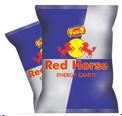
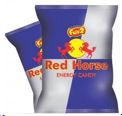
Red Bull AG (hereinafter ‘Red Bull’), a wholly owned subsidiary of Red Bull GmbH, is known across the globe for its energy drinks. Red Bull has gained immense popularity in India also. The brand is easily spotted in retail stores for a. its mark ‘RED BULL’,  b. a logo depicting 2 bulls facing one another, c. a whole sun in the background, d. the can of the drink bearing blue and silver trapezoid, resulting in the mark looking like this:  

. Each aspect described above is individually registered under the Trade Marks Act, 1999 in classes, inter alia, 30 and 32. The mark has also gained the status of a ‘well-known mark’ in India, listed here.


Red Bull filed a case [CS(COMM) 227/2021] against Bakewell Biscuits Private Limited (hereinafter referred to as ‘Bakewell’) at the Hon’ble High Court of Delhi, on the grounds of trademark infringement and passing off.

Bakewell adopted a mark deceptively similar to 

 and merely replaced the bulls with horses resulting in the mark to look like: 
. Bakewell is allegedly selling ‘Energy candies’ under the above mark. Red Bull, in its plaint, also stated that it has ‘Opposed’ Bakewell’s trademark application bearing no. 4327842.


On observing the merits in the case, the Court on May 18, 2021, granted an ex-parte ad-interim injunction against Bakewell retraining them from using the mark 

 or any other mark deceptively similar to Red Bull’s mark. In view of the restrictions issued due to the ongoing pandemic, the Court has currently not issued directions upon the application for Local Commissioner and has kept it pending for the time being.  


To view all formatting for this article (eg, tables, footnotes), please access the original here [RK Dewan & Co].

11/05/2021

"More than a wine label when prestige is at stake"

 By François Willems

Prestigious wineries' trademarks affected by greed

In recent years the market for sale and the value of grands crus wines has increased significantly. For example, the names of Bordeaux wine domains (eg, Château Petrus, Château Latour, Château Lafite-Rothschild, Château Mouton Rothschild and Château Margaux) are among the most prized wines in the world.

As with the art market, speculation on wines attracts counterfeiters who hope to capture some of the huge profits that the resale of such wines generates each year. A common practice of such counterfeiters is to obtain genuine empty bottles and labels of well-known wines and refill them with a mixture of inferior grape juices in the hope of selling them at a high price to gullible buyers.

As well as misleading buyers about the authenticity and origin of wines, this practice undermines the brand prestige of the affected wineries. It diminishes the feeling of scarcity that brand owners who produce only a limited number of hectolitres per vintage skilfully maintain.

Evidently, such counterfeit wines are problematic for Bordeaux domains. However, this is not the only type of brand infringement with which renowned French wineries must deal. Sometimes, simply putting prestigious brands on everyday objects enables counterfeiters to sell their products at a higher price. As a result of the COVID-19 pandemic, face masks are the new canvas for trademark misappropriation (Figure 1).

A recent Belgian court decision addresses free riding on the prestige of a well-known trademark.

Figure 1: example of a mask which misappropriates the PETRUS trademark

Wine labels for unlawful decorative purposes

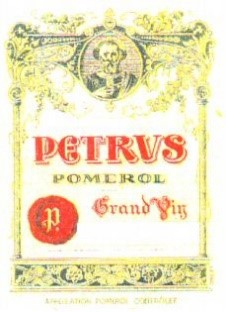
On 6 January 2021 the Tribunal of First Instance (correctional) of Hainaut, Charleroi division rendered a decision (Petrus v X (19C000951)) regarding infringement of the well-known figurative trademark PETRUS (Figure 2).

Figure 2: PETRUS trademark

Facts

The case concerned the interception of a person in possession of more than 3,000 Château Petrus wine labels at Gosselies Airport, Charleroi. The defendant admitted that the labels were counterfeit. He even stated that he had aged the labels with blackcurrant juice to match the labels' visual appearance to their alleged vintage date. However, he did not consider that he was infringing Petrus's rights because the labels were intended to decorate wine bars and not to be affixed to bottles.

Decision

The Charleroi tribunal replied that the defendant's reasoning was erroneous. As the infringed figurative mark was a reputed trademark, its use could be prohibited even for goods other than those designated (eg, decorative objects). The issue was that the defendant had intended to take undue advantage of the trademark's repute and distinctive power as the labels were acquired with the aim of reselling decorative objects which bore such labels at a high price. The infringement of counterfeiting was therefore established.

With this decision, the Charleroi tribunal reaffirmed that trademark counterfeiting damages the prestige and reputation of the affected trademark. In this case, the counterfeit objects were not sold so Petrus did not suffer any material damage. However, the case may have caused moral damages.

One of the interesting points in this case was the calculation of compensation. The Charleroi tribunal considered that each counterfeit label further damaged the exclusive and rare character of the PETRUS mark. Therefore, the moral damage was compensated with a flat rate of €10 per infringing product.

Comment

Establishing a reputation for a trademark is a long and costly process. When a trademark achieves this status, as in the case of the Bordeaux wineries, its owner can claim a broader protection which extends to goods and services not designated by their trademark registrations. Although the owner of such a renowned trademark obtains wider protection, the downside of such recognition is that such trademarks are more likely to be the target of parasitism and unauthorised use by unscrupulous infringers.

Source: Gevers

"Catalonia High Court of Justice confirms grant of DYNAMIC SANTIVERI trademark" by Paula Gutiérrez


On 23 February 2021 the Fifth Section of the Contentious-Administrative Chamber of the Catalonia High Court of Justice (CHCJ) dismissed a contentious-administrative appeal filed by Laboratorios ERN SA, thus confirming the grant of Spanish Trademark 3,717,283, DYNAMIC SANTIVERI.

Facts

Casa Santiveri SL was a company principally dedicated to the production of health food preparations. On 4 May 2018 it applied to register Spanish Trademark 3,717,283, DYNAMIC SANTIVERI (a word mark), for goods in Class 5 of the Nice Classification – specifically, "food supplements based on collagen, hyaluronic acid, vitamins, minerals and plants".

Laboratorios ERN, a manufacturer of pharmaceutical products, filed an opposition against such trademark, alleging that it was prohibited under Article 6(1)(b) of the Trademark Act (17/2001) because it was incompatible with Laboratorios ERN's priority Spanish Trademark 0020,631, DYNAMIN (a mixed mark), which was registered for:

  • "specific and chemical products" (under Class 1 of the Nice Classification); and
  • "specific and pharmaceutical products, dietetic food products of a medicinal nature in any form of presentation" (under Class 5 of the Nice Classification).

SPTO decision

On 20 November 2018 the Spanish Patent and Trademark Office (SPTO) rejected Laboratorios ERN's opposition and granted the DYNAMIC SANTIVERI trademark, considering that Article 6(1)(b) of the Trademark Act did not apply due to the word differences between the trademarks.

On 11 December 2018 Laboratorios ERN filed an appeal against the SPTO decision. On 10 May 2019 the SPTO dismissed the appeal, thereby confirming the decision.

Laboratorios ERN filed a contentious-administrative appeal before the CHCJ.

CHCJ decision

On 23 February 2021 the CHCJ resolved the dispute by confirming that Article 6(1)(b) of the Trademark Act did not apply to the case.

According to the court, Article 6(1)(b) of the Trademark Act prevents the registration of a trademark where the signs and goods or services are similar to those of a prior trademark (ie, where there is a likelihood of confusion or association).

Based on Supreme Court case law, the court stated that a likelihood of confusion must be analysed by considering:

  • the signs' distinctive and dominant elements;
  • the signs' identity or similarity;
  • the identity of the goods or services;
  • the degree of knowledge of the trademark in the market; and
  • the association that may be made with the registered sign.

The court also considered EU case law, which states that a comparison must consider the sign as a whole, without excluding the fact that a combined trademark may be dominated by one of its elements.

Accordingly, the court considered that Article 6(1)(b) of the Trademark Act was not applicable for the following reasons:

  • Even though the trademark DYNAMIC SANTIVERI was similar to the trademark DYNAMIN in its initial word, the final letter was different.
  • The first term, 'dynamic', evoked the Spanish word 'dinámico' (ie, 'dynamic') and appeared as accessory or complementary to the main term of the DYNAMIC SANTIVERI trademark, 'Santiveri', which was sufficiently distinctive with respect to the opposing trademark.
  • Although the scope of application of both trademarks was Class 5, the trademark DYNAMIC SANTIVERI had its own overall distinctiveness, enabling both trademarks to coexist in the market with no risk of confusion. Such risk had to be analysed from a rational and logical perspective, considering the public's average level of cultural knowledge.

Therefore, the CHCJ dismissed Laboratorios ERN's appeal, confirming the grant of the DYNAMIC SANTIVERI trademark because sufficient denominative and applicative differences existed between the two trademarks to avoid any likelihood of confusion in the mind of a general consumer.

The plaintiff was ordered to pay the legal costs. This decision is final.


Source: internationallawoffice/com.Newsletters-Intellectual/Property-Spain.Grau-Angulo