Affichage des articles dont le libellé est Bebidas energéticas. Afficher tous les articles

21/05/2021

India: A fight between Bulls and Horses!

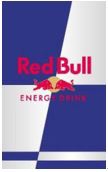
Red Bull AG (hereinafter ‘Red Bull’), a wholly owned subsidiary of Red Bull GmbH, is known across the globe for its energy drinks. Red Bull has gained immense popularity in India also. The brand is easily spotted in retail stores for a. its mark ‘RED BULL’,  b. a logo depicting 2 bulls facing one another, c. a whole sun in the background, d. the can of the drink bearing blue and silver trapezoid, resulting in the mark looking like this:  

. Each aspect described above is individually registered under the Trade Marks Act, 1999 in classes, inter alia, 30 and 32. The mark has also gained the status of a ‘well-known mark’ in India, listed here.


Red Bull filed a case [CS(COMM) 227/2021] against Bakewell Biscuits Private Limited (hereinafter referred to as ‘Bakewell’) at the Hon’ble High Court of Delhi, on the grounds of trademark infringement and passing off.

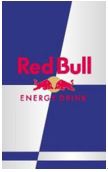
Bakewell adopted a mark deceptively similar to 

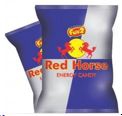
 and merely replaced the bulls with horses resulting in the mark to look like: 
. Bakewell is allegedly selling ‘Energy candies’ under the above mark. Red Bull, in its plaint, also stated that it has ‘Opposed’ Bakewell’s trademark application bearing no. 4327842.


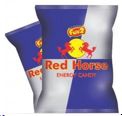
On observing the merits in the case, the Court on May 18, 2021, granted an ex-parte ad-interim injunction against Bakewell retraining them from using the mark 

 or any other mark deceptively similar to Red Bull’s mark. In view of the restrictions issued due to the ongoing pandemic, the Court has currently not issued directions upon the application for Local Commissioner and has kept it pending for the time being.  


To view all formatting for this article (eg, tables, footnotes), please access the original here [RK Dewan & Co].

23/11/2020

"Is the nickname protected by law?" by Aleksandra Krześniak


By the judgment announced on October 23rd, 2020[1], the Polish Supreme Court decided on a 10-year-old dispute between Dariusz Michalczewski (a well-known Polish athlete, boxer; using the nickname “Tiger”) and the company FoodCare Sp. z o.o. ("FoodCare"), concerning the nickname "Tiger". The Civil Chamber of the Supreme Court dismissed the cassation complaint of the plaintiff (D. Michalczewski) and upheld the judgment of the Court of Appeal in Kraków. In 2017, the Court of Appeal dismissed the claim for payment of over PLN 21 million for infringement of personal rights.

In the opinion of the Supreme Court, a nickname is not a personal right and is not protected by law like a pseudonym; due to the fact that it does not replace the last and first name, but appears alongside them. As a consequence, FoodCare did not infringe the personal rights of D. Michalczewski by using the name "Tiger" as the name of the energy drinks produced.

Subject of dispute and trademarks

Dariusz Michalczewski claimed compensation from FoodCare for the infringement of his personal rights in the form of the nickname "Tiger" as well as violation of the trademarks registered on his behalf. According to the plaintiff, FoodCare (defendant) sold energy drinks under the name "Tiger" after the cooperation between the parties had ended (termination of the license agreement), i.e. from October 2010 until the end of December 2011, without paying him for the promotion related to the use of the nickname "Tiger". As a result of Michalczewski's statements - who claimed to be entitled to the name of energy drinks "Tiger" - at the end of 2011 FoodCare changed the name of its products from "Tiger" to "Black" and ceased selling goods under the name "Tiger".

As a side note, it is worth noting that both parties are entitled to registered national trademarks: Dariusz Michalczewski owns rights to two word and figurative marks TIGER (R.145637 and R.191973), while FoodCare a word mark BLACK TIGER (R.179222). Interestingly, there are also several word marks TIGER submitted for registration by D. Michalczewski; however, for several years now the characters have the status "Application published" - perhaps the Polish Patent Office is waiting for a civil case to be resolved.

The claim related to the infringement of personal rights and registered trademarks was determined by D. Michalczewski at over PLN 21 million. The boxer has been advertising “Tiger” energy drinks since 2003.

Judgments of the first and second instance courts

The Circuit Court in Cracow by its judgment of October 12th, 2016[2] acknowledged Michalczewski's claim to the amount of PLN 2.4 million; and dismissed it as to the remainder part. In the opinion of the Court, the action of FoodCare was contrary to good practice, especially the principle of "pacta sunt servanda". Additionally, the Court also emphasized that the behavior of the defendant company, which used the image of a boxer in a promotional campaign and then - after termination of the licensing agreement - produces the same drink and claims that name of the product has nothing to do with the plaintiff, cannot be accepted.

Only FoodCare appealed against that judgment. The court of second instance, i.e. the Court of Appeal in Cracow, by a judgment of November 27th, 2017[3] changed the appealed judgment of the Circuit Court in such a way that it dismissed Michalczewski's claim in its entirety. In the opinion of the Court, the contract (here: licensing agreement) does not create a personal right; the word “Tiger” does not constitute a value of social significance and therefore, this designation can be used commonly. The plaintiff filed a cassation complaint with the Supreme Court against the judgment of the second instance court.

Importantly, both the circuit court and the court of appeal took the position that the plaintiff had not demonstrated any violation of trademark rights (the infringement has not been proven). In connection with the above, the Supreme Court, at the stage of cassation proceedings, was only to decide whether by advertising and marketing the energy drink under the name "Tiger" (specifically: "Tiger Energy Drink") there have been violations of D. Michalczewski's personal rights to his nickname "Tiger".

Supreme Court: the nickname is not protected by law

The Supreme Court dismissed Michalczewski's cassation complaint and ruled that the nickname is not protected as a pseudonym, which replaces the first and last name. A nickname appears next to the first and last name (not instead of them), therefore it is not a personal right. In the light of the above, there is no inseparable connection between the nickname and the person who uses it. By dismissing the cassation complaint, the Supreme Court upheld the judgment of the Court of Appeal, which rejected Michalczewski's claim in its entirety.

In the justification of the judgment, the Court emphasized that there is a difference between a nickname and a pseudonym; they cannot be considered equivalent to each other. In the opinion of the Court, the pseudonym is primarily intended to replace the real name and surname of a specific person, ensuring his anonymity. A nickname in turn defines a person with a known identity. This was also the case with the term “Tiger”, which always appeared in the context of the plaintiff's name, not instead of it.

In practice, the ruling of the Supreme Court means that Dariusz Michalczewski is not exclusively entitled to use (including commercial use) in the public space of the name "Tiger". The word "Tiger" is therefore not solely assigned to D.Michalczewski. Thus, the Court shared FoodCare's argument that the plaintiff has never acquired the rights to the name "Tiger" as a designation to individualize the FoodCare product in the form of an energy drink.

In conclusion, it is worth mentioning that one of the arguments indicated by Michalczewski was the fact that he is the only athlete who "transformed" a sports nickname into a business success. Nevertheless, in the opinion of the Court, the above is not sufficient to determine that a personal right protected by law could have been "created" on this basis. The ruling issued in the present case may have a real impact on other proceedings concerning the violation of personal rights.


Source: https://s3.amazonaws.com/documents.lexology.com/4c2564cf-da05-4776-86ae-1353fa8c3dca.pdf?AWSAccessKeyId=AKIAVYILUYJ754JTDY6T&Expires=1606166618&Signature=RDULSoejj9P7hQRA%2F4YvaBehorE%3D

22/01/2019

UK - ASA rules that Red Bull ad implied that the energy drink improved focus and concentration


On 16 January 2019, the ASA published its ruling in relation to a poster advert for Red Bull which was placed in various stations on the London Underground. The advert promoted a Red Bull consumer initiative called the 4pm Finish, which was intended to urge people to leave work at 4pm one Friday. 
The poster depicted a cartoon of two happy women standing slightly in front of and either side a large can of Red Bull, each facing away from the can. It was accompanied by the following poem:
“THE SECRET TO FINISHING EARLY. Plans are afoot to finish at four, but first, you have meetings and deadlines galore. So remember the secret of every office superstar, and tame every task that’s thrown on your radar. Because to leap every hurdle a hectic day brings, you just need to know: RED BULL GIVES YOU WIIINGS”.
Beneath this was the image of a clock showing 4pm and a flag which read:  “FOR A FLYING 4PM FINISH ON 14TH SEPTEMBER VISIT REDBULL.CO.UK/4PMFINISH”. There were cartoon images of stationary and paper next to the flag.
The 4pm Finish webpage referred to in the advert contained a range of blog posts various professionals giving tips on productivity and managing time. 
The ASA received a complaint that the advert implied that the Red Bull energy drink had a beneficial effect on health, in particular that it improved focus and concentration. As such, the complainant challenged whether the advert made a health claim which did not comply with the rules on making health and nutrition claims.

Advertising health claims

Health claims are covered by section 15 of the Code of Non-broadcast Advertising, Sales Promotion and Direct Marketing (the “CAP Code”) which implements EU Regulation (EC) No 1924/2006 on nutrition and health claims (the “EU Regulation”). The EU Regulation established the EU Register of nutrition and health claims. 
A health claim is any claim that states, suggests or implies a relationship between a food category, a food or one of its constituents, and health. Advertisers can only make health claims which are listed as authorised in the EU Register (or claims that would have the same meaning to the consumer) in their marketing communications. Such claims cannot be exaggerated and advertisers must hold documentary evidence to show they meet the conditions of use associated with the relevant claim. 
Trade marks which could be construed as a health claim, and which were in use before 1 January 2005, are exempted from the rules until January 2022. As such, the ASA did not consider whether “Red Bull gives you wiiings” could be interpreted as a health claim. 

The ASA’s ruling

The ASA upheld the complaint. It took the view that Red Bull had made an implied health claim and that the implied health claim was not an authorised claim listed on the EU Register. As such, the advert was found to be in breach of rule 15.1 of the CAP Code.  
Red Bull explained that the advert was intended to promote the 4pm Finish initiative rather than make a direct or implicit suggestion that drinking Red Bull would help consumers achieve certain benefits. Red Bull also emphasised the cartoon-like imagery, humorous tone and fantastical nature of the advert, which was consistent with the brand’s reputation for light-hearted advertising, and which they believed made clear that the advert was not promoting any specific health benefits. Moreover, neither of the women were shown drinking Red Bull, nor was there any suggestion that they had drunk the Red Bull. There was therefore no indication of the women having consumed the product, let alone having received any health benefit from having done so. 
Notwithstanding Red Bull’s response, the ASA considered that the advert depicted a scenario of being busy at work which they thought would be relatable to many consumers. Further, the ASA took the view that the line “…to leap every hurdle a hectic day brings” implied that Red Bull could help improve consumers’ mental focus, concentration and energy levels and therefore increase productivity. 
The ASA also considered that the picture of the Red Bull can, the general imagery and the text together made it clear that the poster was for Red Bull and that any implied health claims in the ad were in respect of the product. This was despite the fact that the advert did not show the women consuming Red Bull. There was also no express reference in the text to “Red Bull” other than in the company’s well-known slogan, “Red Bull gives you wiiings”.
The ASA therefore decided that customers would perceive a relationship between Red Bull and health, namely improved increased mental focus, concentration and energy levels.

Comment

The decision is somewhat surprising. Whilst the poem in the advert clearly encourages consumers to increase productivity and to “leap every hurdle a hectic day brings” so that they can finish work early, there is no express suggestion that Red Bull can be used by consumers to achieve this. The advert did not show people obviously busy at work or consuming the product, and does not even make any reference to the Red Bull product in the text as it was intended to promote the company’s 4pm Finish initiative. 
The ruling is also inconsistent with a previous decision relating to two Red Bull adverts which was issued by the ASA in February 2018 following a complaint about implied health claims. In that case, the ASA concluded that consumers were unlikely to interpret the adverts as implying a relationship between a food/ingredient and health and took into consideration the humorous and fantastical tone of those adverts as well as the lack of an overt reference to a health benefit. 

Given this more restrictive approach from the ASA in the context of this advert, food and drink advertisers should take care with their advertising, especially those themed around wellness, or which may be considered as themed around wellness.  It is always important to consider what claims may be implied, and to make sure that there are no implied claims which make unauthorised health claims even where no express references to the advertiser’s product are made.