Affichage des articles dont le libellé est Biotecnología. Afficher tous les articles

05/02/2022

New breeding techniques and regulation of GMOs: South African update


Introduction

In 2019, the scope of the South African Genetically Modified Organisms Act 1997 (the GMO Act),(1) as amended by the Genetically Modified Organisms Act 2006,(2) in relation to new breeding techniques (NBTs) was explored and recommendations were made (for further details, please see "New breeding techniques and regulation of genetically modified organisms"). NBTs include many now popular and commonly used tools for genome editing, including clustered regularly interspersed short palindromic repeats (CRISPR).

Fundamentally, the debate related to whether NBTs and products arising from NBTs were subject to the current regulatory system governing genetically modified organisms (GMOs). The main question was related to the definition of GMOs in the GMO Act and which organisms fall within this definition and therefore must be regulated as GMOs in terms of the GMO Act, and which organisms will be excluded from the application of the GMO Act.

The GMO Act defines a GMO as "an organism the genes or genetic material of which has been modified in a way that does not occur naturally through mating or natural recombination or both".

The regulation of organisms created through NBTs and the characterisation of such organisms, or products derived from them, creates difficulties in that since such organisms do not necessarily incorporate genetic material from another organism in their genome, it can be extremely difficult to determine whether organisms were created by conventional breeding or random mutation, or that the organisms were indeed created through NBTs.

Recent development

In a public notice published on 27 October 2021, the position in South Africa was clarified by the Executive Council under the GMO Act, in which it was concluded that the current risk assessment framework that exists for GMOs and products derived from GMOs would also apply to organisms created through NBTs.

The Executive Council consists of representatives of seven different departments within the South African government and is an advisory body to the Minister of the Department of Agriculture, Land Reform and Rural Development (DALRRD) on matters relating to GMOs. The Executive Council is also the decision-making body that approves or rejects GMO permit applications.

Accordingly, the application templates for contained use, trial release, commodity clearance and general release of GMOs have been revised and there are now revised application forms for GMO permits.

Key concerns

The decision by the Executive Council has met with some criticism and disappointment within the agricultural industry in South Africa. This strict approach to organisms created using NBTs is contrary to the practices followed in several other countries in the world – most particularly, Brazil, Argentina, Japan and Israel – and has been argued to be onerous and impractical.

In particular, some agricultural industry concerns that have been raised include that:

  • local innovators developing organisms created with NBTs or products derived from these organisms may be discouraged from developing NBT technology, in turn resulting in local innovation in the production of new and innovative plant varieties that make use of such techniques for pathogen resistance, drought tolerance and the like falling behind;
  • the ability of local farmers to access such NBT organisms may be detrimentally affected, in turn resulting in similar challenges with regard to pathogen resistance, drought tolerance, and sustainable and environmentally conscious farming;
  • foreign entities involved in the development of NBT organisms or products may be discouraged from importing such organisms or products into South Africa, to the detriment of the South African industry and consumers, and particularly in relation to food products. This could, at worst, result in food insecurity; or
  • alternatively, products derived from NBT organisms may be imported into South Africa without proper regulatory approval, and since it is so difficult to characterise such products as derived from an NBT, there would be an unfair advantage created for unscrupulous entities.

This has led to an appeal under section 19 of the GMO Act by the Agricultural Business Chamber, which is engaging with DALRRD and the Executive Council to try to develop an alternative, effective, efficient and evidence-based regulation of products derived from NBTs. The proposal is that organisms generated through NBTs should not be subject to regulation under the GMO Act if they are identical to, or indistinguishable from, products that could have been obtained naturally or through conventional breeding methods.

The alternative approach proposed in the appeal is similar to a previously proposed approach in that rather than blanket regulation of non-natural processes (including the use of NBTs) for genetic modification of organisms, or the organisms created by such processes, provision should be made, within a system that is both process- and product-triggered, for regulation to focus on genetic modification that is likely to be more harmful, hazardous or risky to the environment, human and animal health than that which might be achieved by natural mating or natural recombination. This type of assessment could be performed by the regulator on a case-by-case basis, taking into account information provided by an applicant through a preliminary notification procedure.

Comment

Given the importance of NBTs in the development of new-generation plant varieties having improved properties in relation to pathogen resistance and drought tolerance, and to facilitate sustainable and environmentally conscious farming, the outcome of the appeal is awaited with much anticipation.

For further information on this topic please contact Joanne van Harmelen at ENS Africa by telephone (+27 21 410 2500) or email (jvanharmelen@ensafrica.com). The ENS Africa can be accessed at www.ensafrica.com.

Endnotes

(1) Act No. 15 of 1997.

(2) Act No. 23 of 2006.

10/07/2019

USA - Mississippi Joins States Enacting Stricter Labeling Requirements for Food Products Developed from Animal Cell Cultures


On July 1, Mississippi legislators passed a bi-partisan bill to prohibit certain animal-derived food products from being labeled as “meat” or a “meat food product.” While Senate Bill 2922 also imposes the same new restriction on plant-based and insect-based food products, its passage was driven at least in part to address recent developments in biotechnology that allow the growth of animal-derived food products in laboratories, rather than from livestock raised on farms and ranches. Specifically, SB 2922 amends Mississippi state law to prohibit meat labeling for any “plant-based” or “insect-based” food products, together with food products containing “cultured animal tissue produced from animal cell cultures outside the organism from which it is derived.” Its passage in Mississippi follows similar regulatory action in other states over the last year, including Arkansas, Missouri, Louisiana, and Wyoming.
Cell-cultured animal products – also referred to as “clean meat” or “cell-cultured meat” – are developed by scientists from a biopsy of a living or recently slaughtered animal in a sterile laboratory environment. These cells are then grown into products that mimic meat products in taste, texture, and aesthetics. Scientists have begun to differentiate and mature cells to resemble traditional meat products such as hamburgers, chicken nuggets, steak, and fish while reducing reliance on, and in some cases replacing, modern animal agriculture and industrial production practices.
Mississippi’s latest action was immediately followed by a lawsuit filed in federal court by several public interest groups. Led by the Institute for Justice, Upton’s Naturals Co., and the Plant Based Food Association, the complaint was filed in the U.S. District Court for the Southern District of Mississippi on July 1, 2019, alleging that Mississippi’s new law places an unconstitutional limitation on freedom of speech under the First Amendment. In their complaint, plaintiffs focus on the labeling of plant-based products, rather than clean meat products. A similar legal action was brought in August 2018 against Missouri’s meat labeling restrictions; it remains pending as of this date.

Alan Sachs and Sarah Kettenmann

Beveridge & Diamond's Biotechnology and Pesticides Regulation practice group and Biotechnology and Pesticides industry groups help clients develop and commercialize newer, safer, and petter ways of achieving plant vitality, pest control, and animal breeding. We help companies address cutting-edge issues where agriculture, livestock, pesticides, and biotechnology converge with the law. For more information, please contact the authors.

15/06/2019

USA - APHIS Proposes Revised Regulatory Framework Regarding The Movement Of Certain Genetically Engineered


The U.S. Department of Agriculture’s (USDA) Animal and Plant Health Inspection Service (APHIS) issued a proposed rule on June 6, 2019, on the movement of certain genetically engineered (GE) organisms.  84 Fed. Reg. 26514.  The proposed rule would revise the regulations regarding the movement, including the importation, interstate movement, and environmental release of certain GE organisms in response to advances in genetic engineering and APHIS’ understanding of the plant pest risk posed by them, “thereby reducing regulatory burden for developers of organisms that are unlikely to pose plant pest risks.”  APHIS notes that the proposed rule “would mark the first comprehensive revision of the regulations since they were established in 1987.”  It would provide “a clear, predictable, and efficient regulatory pathway for innovators, facilitating the development of new and novel [GE] organisms that are unlikely to pose plant pest risks.”  Comments on the proposed rule are due by August 5, 2019. For further details, see the Bergeson & Campbell, P.C. (B&C) memorandum here

16/05/2019

New breeding techniques and regulation of genetically modified organisms


Background
The recent European Court of Justice's (ECJ's) ruling in Confédération paysanne v Premier ministre(1) regarding the status of organisms obtained by new breeding techniques as genetically modified organisms (GMOs) has again brought the scope of the South African GMOs Act (15/1997) into question.
New breeding techniques include many new and sophisticated tools for genome editing, for example:
  • zinc-finger nucleases;
  • transcription activator-like effector nucleases; and
  • clustered regularly-interspersed short palindromic repeats.
The difficulty with regulating organisms created through such techniques is that these organisms may be indistinguishable from organisms which have naturally evolved.
This question fundamentally relates to:
  • the definition of 'GMOs' in the GMOs Act and which organisms will fall within this definition and be regulated as GMOs under the GMOs Act; and
  • which organisms will be excluded from the application of the GMOs Act.
Interpretation of statutes
The ECJ ruled that:
  • all organisms obtained by mutagenesis are GMOs insofar as the techniques and methods of mutagenesis alter an organism's genetic material in an artificial way; and
  • only organisms obtained through techniques or methods of mutagenesis, which have conventionally been used in a number of applications and have a long safety record, are excluded from the scope of the EU GMO Directive.
This ruling shows that clear consideration has been given to the risks or hazards to health and the environment.
The ECJ's decision is relevant to the South African position, since the definition of 'GMOs' in the EU directive (ie, "an organism, with the exception of human beings, in which the genetic material has been altered in a way that does not occur naturally by mating and/or natural recombination") is almost identical to the South African GMOs Act's definition of a 'GMO' (ie,"an organism the genes or genetic material of which has been modified in a way that does not occur naturally through mating or natural recombination or both").
South Africa has a holistic strategy to interpreting statutes based on a constitutional, contextual or purposive approach. The ordinary grammatical meaning of words and phrases must be interpreted in the context of:
  • the act;
  • the act's regulations and any supporting guidelines;
  • historical factors relevant to the legislature's meaning when drafting the legislation; and
  • present government policy.
Notably, the South African Constitution compels the interpreter to consider the spirit, purport and objects of the South African Bill of Rights, including the democratic values of human dignity, equality and freedom when interpreting legislation. Further, the Constitution provides that when interpreting any legislation, every court must prefer any reasonable interpretation of the legislation that is consistent with international law over any alternative interpretation that is inconsistent with international law.
Meaning of 'GMO'
In the context of an initial grammatical interpretation of 'GMO' as defined in the GMOs Act, it is unclear whether a 'trigger' must be:
  • product-based (ie, the organism must still contain the modification of the gene or genetic material modification for the act to apply); or
  • process-based (ie, the genes or genetic material of the organism must at some stage have been modified, but need not still be modified, for the act to apply).
Further, the phrase "modified in a way that does not occur naturally through mating or natural recombination or both" is also ambiguous. Does it mean that:
  • if the modification of the genes or genetic material is outside of what may occur through natural mating or recombination, then the organism is genetically modified and therefore regulated; or
  • if the modification of the genes or genetic material is performed by artificial or human intervention (ie, not naturally), or is outside of what may occur through mating or natural recombination, then the organism is genetically modified and therefore regulated?
The difference between the two interpretations is that in the first case, an organism with genes or genetic material that has been modified (including by human intervention) but has a natural character that may occur in genes or genetic material by mating or natural recombination would not be a GMO and would therefore not be regulated.
However, if the second case were to be followed, regardless of whether the organism has a genetic modification that occurs naturally, if the modification were artificial (ie, through human intervention), the organism would be a GMO and therefore would be regulated.
The grammatical interpretation of the definition of 'GMO' set out in the GMOs Act and its use throughout the act and its regulations and guidelines appears to provide ample evidence that the GMOs Act aims to regulate not only GMO products themselves, but also activities, including the development and production of GMOs (ie, both a process and product-triggered interpretation).
Further, techniques where recombinant DNA molecules or GMOs are employed in "conjugation, transduction, transformation or any other natural process" are specifically excluded from the application of the GMOs Act. This provides support for the interpretation that only genetic modification that is outside of what might be achieved naturally by mating or natural recombination (ie, 'natural process') is regulated as a GMO.
The GMOs Act's objectives also include the following phrases, which are important for a holistic interpretation:
  • "promote responsible";
  • "limit possible harmful consequences";
  • "effective waste management";
  • "risk assessment"; and
  • "are appropriate and does not present a hazard".
These phrases indicate that the definition of 'GMO' should be considered in the context of the objectives relating to responsible use and limitation of harm or any hazard to the environment or human and animal health.
This interpretation also aligns with the constitutional imperative to consider the context of the Bill of Rights, under which everyone has the right to:
  • an environment that is not harmful to their health or well-being; and
  • have the environment protected.
Comment
Therefore, arguably rather than a blanket regulation of non-natural processes (including the use of new breeding techniques) for genetic modification of organisms (or the organisms created by such processes) there is provision within a system that is both process and product-triggered to focus on genetic modification that is likely to be more harmful, hazardous or risky to the environment, human and animal health than that which might be achieved by natural mating or natural recombination. Such an assessment should be performed by the regulator on a case-by-case basis, preferably considering information provided by an application through a preliminary notification procedure.
It will be interesting to follow the development of legislation in this field.
Endnotes
(1) Case C-528/16.
This article was first published by the International Law Office

 Joanne van Harmelen [ENSafrica]

W

09/05/2019

Key Provisions Of USDA's Bioengineered Food Disclosure Rule

Arent Fox - https://www.arentfox.com/


On December 21, 2019, the U.S. Department of Agriculture (USDA) Agricultural Marketing Service (AMS or Agency) issued its final rule establishing a National Bioengineered (BE) Food Disclosure Standard (NBFDS). The rule implements amendments to the Agricultural Marketing Act made by Public Law 114-216 on July 29, 2016 (the Act) and follows an initial request for comment by AMS on June 28, 2017 and publication of a proposed rule on May 4, 2018. This two-part article summarizes key provisions of this new federal marketing standard, including the Agency’s approach to defining “bioengineered foods” and addressing refined ingredients, voluntary labeling, absence claims, and the applicable disclosure threshold. Part 1 discussed compliance deadlines, responsible parties, definitions, AMS’ list of bioengineered foods, and exemptions from the rule. In this Part 2, we’ll cover disclosure options, voluntary disclosure, absence claims, administrative issues, and enforcement.
Mandatory Disclosure
The rule incorporates the four disclosure options provided in the Act: text, symbol, electronic or digital link, and text message. The BE disclosure must appear on the information panel or the principal display panel of the product label, or on an alternate label panel if those panels contain insufficient space.
  1. Text Disclosure. For a BE raw agricultural commodity or an ingredient produced from that commodity, the text disclosure is “bioengineered food.” For a multi-ingredient food that contains both BE ingredients and non-BE ingredients, the text disclosure is “contains a bioengineered food ingredient.”
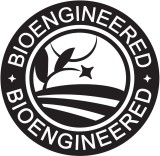
  2. Disclosure Via Symbol. Regulated entities seeking to use a symbol may use a black and white or color version of the following, which includes the word “bioengineered” in an effort to provide more information to consumers in a way that is appropriate and non-disparaging:
  1. Disclosure Via Electronic/Digital Link. Regulated entities choosing to disclose BE content using the electronic or digital link option must accompany the link with the statement “Scan here for more food information” (or equivalent language that reflects technological changes) along with a telephone number and clear calling instructions, i.e., “Call [1-000-000-0000] for more food information,” in close proximity to the link. The telephone disclosure must be available at all times of the day and clearly provide BE food information to the caller. Prerecorded information is permitted. The electronic or digital link must provide the bioengineering disclosure on the first product information page accessed through the link, without any marketing and promotional information.
  2. Disclosure Via Text Message. Regulated entities that choose this option are required to include a statement on the package that instructs consumers on how to receive a text message. Those instructions can be shared or centralized among regulated entities, if so desired. Industry is not prohibited from developing a standardized instruction or response if it is in compliance with the NBFDS regulations.
The rule also provides options for disclosure in certain special cases:
  1. Additional Disclosure Options for Small Food Manufacturers. AMS provides small food manufacturers, defined as a “food manufacturer with annual receipts of at least $2,500,000 but less than $10,000,000,” with two additional disclosure options for the product label: (1) a telephone number accompanied by appropriate language, e.g., “Call [1-000-000-0000] for more food information”; or (2) an Internet website address, e.g., a URL, with accompanying text, e.g., “Visit [URL of the website] for more food information.”
  2. Additional Disclosure Options for Small and Very Small Packages. For small and very small packages, defined using FDA’s labeling requirements, regulated entities can replace the statement “Scan here for more food information” associated with a link disclosure with the statement “Scan for info.” For the text message, entities can replace the statement “Text [number] for more bioengineered food information” with “Text [number] for info.” For very small packages, regulated entities may use a label’s preexisting URL or telephone number for disclosure.
  3. Disclosure for Food Sold in Bulk Containers. AMS holds retailers responsible for complying with the BE food disclosure for bulk food. The disclosure must appear on signage or other materials (stickers, bindings, etc.) on or near the bulk item. Entities can use any of the options for disclosure including text, symbol, electronic or digital link, or text message (if applicable).
In response to a comment requesting an alternative website disclosure option, AMS indicated that, while it does not have the authority to require such a disclosure, regulated entities are free to include BE disclosures on their websites.
Voluntary Disclosure
AMS agrees that voluntary BE disclosure is permissible under the Act, and the rule makes voluntary disclosure available to exempt entities and to foods in which rDNA material is not detectable but which are derived from BE crops or foods.
Entities that are otherwise exempt from the requirements of the NBFDS (very small food manufacturers, and restaurants and similar retail food establishments) may voluntarily provide disclosure of BE food that would otherwise be subject to disclosure under the NBFDS. In order to provide consistency with mandatory disclosure requirements and avoid consumer confusion, voluntary disclosure must be in one or more of the forms specified in the rule for mandatory disclosure (i.e., text, symbol, digital or electronic link, text message, or appropriate small manufacturer and small or very small package disclosure options, as applicable).
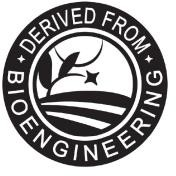
For those foods or food ingredients that (A) do not meet the definition of “bioengineered food,” (B) are not exempt from disclosure under the rule, and (C) are derived from a food on the List (described in Part 1), regulated entities may disclose such foods with one of the BE disclosure options described in the rule (text, symbol, electronic or digital link, text message, or appropriate small manufacturer and small or very small package disclosure options, as applicable). Such voluntary disclosures must state either that the food is “derived from bioengineering” or contains “ingredient(s) derived from a bioengineered source,” although “ingredient” may be replaced with the name of the specific BE crop or ingredient or may use the designated voluntary disclosure symbol.
Voluntary BE disclosure is prohibited for foods that are exempt from mandatory disclosure. For example, a regulated entity could not voluntarily disclose BE content for organic foods or for foods whose BE content falls below the 5 percent inadvertent presence threshold, or for foods that are derived from animals fed BE feed (and are not otherwise subject to disclosure).
Absence Claims
AMS received a number of comments with respect to claims regarding the absence of bioengineering in food. In response, AMS notes that while the NBFDS covers mandatory and voluntary BE and BE-derived claims, the Act does not provide authority for AMS to establish an absence claims regime as part of the NBFDS. AMS also notes that FDA and, for certain products, USDA’s Food Safety Inspection Service retain authority over absence claims and that “[e]ntities seeking to use absence claims should ensure that such claims are in compliance with all applicable Federal laws and regulations and are otherwise truthful and not misleading.” Finally, while foods certified under the National Organic Program are exempt from the BE disclosure requirement, AMS states that the Act does not give the Agency the “authority to establish or align the NBFDS with a non-GMO label.”
AMS acknowledges that entities may participate in voluntary labeling initiatives such as the non-GMO Project so long as they are in compliance with all applicable Federal laws and regulations. To the degree possible, USDA has tried to minimize the impact the NBFDS will have on these voluntary absence claims. AMS acknowledges that some elements of the NBFDS may differ from requirements of some existing voluntary marketing claims. The Agency also notes that it has adopted the statutory definition of “bioengineering,” thereby exempting from disclosure foods such as refined products that have undergone processes that remove modified genetic material.
Other Claims
AMS repeatedly states that nothing in the rule prohibits regulated entities from providing additional statements or other claims regarding BE foods and BE food ingredients provided such statements are consistent with all applicable laws and regulations.
Recordkeeping
The rule provides regulated entities with significant flexibility with respect to recordkeeping, requiring maintenance of records that are “customary or reasonable” to demonstrate compliance. Such entities must maintain records for at least two years beyond the date the product is sold or distributed for retail sale. Entities must respond to AMS requests for records by providing records within five (5) business days of the request, unless AMS extends the deadline. AMS will provide prior notice of at least three (3) business days in advance of on-site inspections. Entities must provide AMS access to facilities necessary for records examinations.
Enforcement
The rule provides a process for any interested person with knowledge of a possible violation to file a statement or complaint with AMS. AMS may enforce compliance through an investigation that includes records audits and examinations or similar activity, either on its own initiative or in response to a complaint from a third party. If the entity that is the subject of such an investigation objects to any findings made by AMS, it may request a hearing in accordance with the rule. If the entity subject to the investigation does not request a hearing, or at the conclusion of a hearing and any subsequent revision of the findings made by AMS, the Agency will make the summary of the final results of the investigation public. The decision to make that summary public constitutes final agency action for purposes of judicial review. AMS does not have authority to issue civil penalties for violations.
The published version of the final rule and preamble (63 pages) can be accessed here:
About The Author:
Karen Ellis Carr is a partner at Arent Fox. She focuses her food and agriculture practice on regulatory counseling and litigation related to products regulated by USDA, EPA, and FDA. Carr works on issues related to biotechnology and other agricultural technologies, pesticides, food safety, advertising, and labeling, and environmental law. In addition to her work with individual companies, Carr has represented a number of industry associations on development and coordination of regulatory strategy, in litigation, and on federal and state legislative issues. She has first- and second-chaired matters in state and federal trial and appellate courts throughout the country and in arbitration and mediation, and has experience in all phases of litigation from pre-litigation strategy and counseling to settlement negotiation and appeals.


12/02/2019

Patentability of plant products obtained by an essentially biological process


In a decision issued by the Technical Board of Appeal on 5 February 2019 (T 1063/18, 5 December 2018), plant products obtained by an essentially biological process were found to be patentable subject matter.
 
The decision deals with the conflict between the interpretation of Article 53(b) EPC by the Enlarged Board of Appeal, and Rule 28(2) EPC of the Implementing Regulations.
 
Essentially biological processes for the production of plants or animals are excluded from patentability according to Article 53(b) EPC.  However, the patentability of products of those essentially biological processes has remained a contentious area that has seen several landmark decisions from the EPO Board of Appeals over the last 5 years, of which this latest decision is another.
 
Conflict between Article 53(b) EPC and the Biotech Directive
 
Following decisions by the Enlarged Board of Appeal in G2/12 and G2/13, claims directed to plant products obtained by an essentially biological process were found to be allowable.  However, a subsequent review of these decisions by the European Commission found the board’s interpretation of Article 53(b) EPC to be at odds with Article 4 of the EU Biotechnology Directive (“the Biotech Directive”).  The intention of the Biotech Directive, the European Commission concluded, had been to also exclude products obtained by an essentially biological process.
 
Rule 28(2) EPC of the Implementing Regulations was subsequently amended by the Administrative Council of the EPO in an effort to preserve legal harmony.  This amendment excluded products obtained by an essentially biological process from patentability.
 
Decision in T 1063/18
 
The recent decision in T 1063/18 challenges the validity of this amendment to Rule 28(2) EPC, finding it to be in direct conflict with the interpretation of Article 53(b) EPC by the Enlarged Board of Appeal.  Since the views of the European Commission, and hence the amendment to Rule 28(2) EPC were not confirmed in a legally binding way, the board concluded that Article 53(b) EPC as interpreted by the EBA should take precedence.  Subsequently, the board found that the applicant’s claim directed to a chilli plant obtained by an essentially biological process was patentable subject matter.
 
Where do we go from here?
 
This latest decision is good news for rights holders with inventions relating to plants.  However, the decision highlights a conflict between the positions of the European Union and the interpretation of the provisions of the EPC by the EPO Boards of Appeal.  How will this conflict be resolved?  Further attempts to amend the Implementing Regulations to the EPC under the direction of the EU would likely arrive at a similar decision as in the present case.
 
An amendment to Article 53(b) EPC itself may be one way to restore harmony between the EPC and the position of the EU.  However, the European Patent Convention is an agreement that extends beyond simply the EU member states.  Amendments to the EPC at the request of the EU could be met with some resistance.
 
The decision could be seen as a victory for patent proprietors in this technical area, but given the interest of the EU Commission in achieving harmonisation in patent law for biotechnological inventions, one suspects that we have not heard the last of this matter.


15/11/2014

Question for written answer E-004785/14 to the Commission - Gilles Pargneaux: Labelling not in line with provisions on genetically modified organisms (GMO)


Question for written answer E-004785/14 to the Commission - Gilles Pargneaux (S&D)(15 April 2014)
.
Subject: Labelling not in line with provisions on genetically modified organisms (GMO)
.
In a report on its 2012 animal feed inspection programme, France's Competition, Consumer Protection and Anti-Fraud Directorate-General reveals that, in recent years, close to 10% of animal feed has not been labelled in line with GMO provisions.
.
Is the Commission aware of that report?
.
If so, what does it intend to do to combat such fraudulent practices?
.
.
Answer given by Mr Borg on behalf of the Commission (17 June 2014)
.
The EU legislation, and particularly Regulation (EC) No 1829/2003(1) on genetically modified food and feed, foresees compulsory labelling requirements for those food and feed products which contain, consist or are produced from GMOs which have been authorised in accordance with the relevant procedure established by the regulation, with the exception of a presence below 0,9% and technically unavoidable.
.
The control and enforcement of EU labelling requirements is the responsibility of Member States, as referred to in Regulation (EC) No 882/2004 on food and feed controls(2)
.
Following the question raised by the Honourable Member as regards the report issued by France's Competition, Consumer Protection and Anti-Fraud Directorate-General on its 2012 inspection programme on GMO labelling on animal feed, the Commission services have asked the French authorities to supply a copy of this report. It appears from this report that non-compliances with labelling requirement are not necessarily intentional and thus be assimilated to fraudulent practices. National administrative or jurisdictional actions, as the case may be, are engaged in the case of repeated incompliance or of refusal by the operator to proceed to the improvements required.
(1)OJ L 268, 18.10.2003.
(2)OJ L 191, 28.5.2004.


( 


22/05/2014

Boletín de bibliografía SOCDERCON nº 56 (2014)


Artículos de revista
.
Índice:
.
Pág.
. 
2 Acuicultura

2 Aditivos

3 Agricultura

3 Alimentación y consumo sostenibles

4 Alimentos funcionales y nutraceuticals
 
4 Apicultura

5 Biotecnología

5 Celiaquía

6 China

8 Declaraciones relativas a la salud
 
9 Denominaciones de origen y otras indicaciones geográficas, marcas de calidad, etc.

9 Economía agroalimentaria

9 Etiquetado, expectativas e información del consumidor
 
10 Nutrición y lucha contra la obesidad

10 Pesca y productos de la pesca

11 Salud y bienestar animal

11 Seguridad e higiene alimentarias

12 Sociología

12 Trazabilidad

13 Vino y otras bebidas alcohólicas

14 Blogs y redes sociales

14 Libros y otros documentos


Consultar: https://app.box.com/s/40727aujc7div72a803q