Affichage des articles dont le libellé est USDA. Afficher tous les articles

19/09/2021

USDA Solicits Public Comment on Labeling Meat and Poultry Products Derived from Animal Cells


On September 2, 2021, the U.S. Department of Agriculture’s Food Safety and Inspection Service (“FSIS”) published an advanced notice of proposed rulemaking to solicit comments from the public regarding the labeling of meat and poultry products made using cultured cells derived from animals. FSIS stated that it would use those comments to make further regulatory requirements.

FSIS also asked for economic data and consumer research to help increase its understanding of the animal cell culture technology industry and related issues regarding labeling and consumer perceptions of food made using this technology.

FSIS asked for public comment on the following fourteen questions:

  1. Should the product name of a meat or poultry product comprised of or containing cultured animal cells differentiate the product from slaughtered meat or poultry by informing consumers the product was made using animal cell culture technology? If yes, what criteria should the agency consider or use to differentiate the products? If no, why not?
  2. What term(s), if any, should be in the product name of a food comprised of or containing cultured animal cells to convey the nature or source of the food to consumers? (e.g., "cell-cultured" or "cell cultivated.")
    1. How do these terms inform consumers of the nature or source of the product?
    2. What are the benefits or costs to industry and consumers associated with these terms?
    3. If meat or poultry products comprised of or containing cultured animal cells were to be labeled with the term "culture" or "cultured" in their product names or standards of identity (e.g., "cell culture[d]"), would labeling differentiation be necessary to distinguish these products from other types of foods where the term "culture" or "cultured" is used (such as "cultured celery powder")?
  3. If a meat or poultry product were comprised of both slaughtered meat or poultry and cultured animal cells, what unique labeling requirements, if any, should be required for such products?
  4. What term(s), if used in the product name of a food comprised of or containing cultured animal cells, would be potentially false or misleading to consumers? For each term, please provide your reasoning.
  5. What term(s), if used in the product name of a food comprised of or containing cultured animal cells, would potentially have a negative impact on industry or consumers? For each term, please provide your reasoning.
  6. Should names for slaughtered meat and poultry products established by common usage (e.g., Pork Loin), statute or regulation be included in the names or standards of identity of such products derived from cultured animal cells?
    1. If so, is additional qualifying language necessary? What qualifying terms or phrases would be appropriate?
    2. Do these names, with or without qualifying language, clearly distinguish foods comprised of or containing cultured animal cells from slaughtered products?
  7. Should terms that specify the form of meat or poultry products (such as "fillet", “patty” or "steak") be allowed to be included in or to accompany the name or standard of identity of foods comprised of or containing cultured animal cells?
    1. Under what circumstances should these terms be used?
    2. What information would these terms convey to consumers?
  8. Should FSIS establish a regulatory standard of identity under its authorities in the FMIA and the PPIA (21 U.S.C. 607(c) and 457(b)) for foods comprised of or containing cultured animal cells?
    1. If so, what would be the standard and how might compliance with the standard be verified?
    2. If so, what would be the labeling terminology for products that do and do not meet a formal standard of identity? What would be the anticipated categories of use? For example, mechanically separated poultry that does not meet the standards of identity outlined in 9 CFR 381.173 may be diverted for production in broths and bases, as well as reaction flavors, i.e., flavors produced by the heating of the protein source in the presence of a reducing sugar.
    3. If so, what are the benefits and costs to industry if the standard of identity is established? Please provide quantitative and qualitative feedback in your response and explain the basis of any quantitative estimates.
    4. If so, what are the consumer benefits and costs to the standard of identity recommended?
  9. What nutritional, organoleptic (e.g., appearance, odor, taste), biological, chemical or other characteristics, material to consumers’ purchasing and consumption decisions, vary between slaughtered meat or poultry products and those comprised of or containing cultured animal cells?
  10. Should any of the definitions for “meat”, “meat byproduct” or “meat food product” found in 9 CFR 301.2 be amended to specifically include or exclude foods comprised of or containing cultured animal cells?
  11. Should any of the definitions for “poultry product” or “poultry food product” found in 9 CFR 381.1 be amended to specifically include or exclude foods comprised of or containing cultured animal cells?
  12. Should FSIS-regulated broths, bases and reaction flavors produced from cultured animal cells be required to declare the source material in the product name, ingredient sublisting or elsewhere on the label?
  13. Should the presence of cultured animal cells in further processed products regulated by FSIS, such as a lasagna made with cell-cultured beef cells as an ingredient, be qualified on the product label? If so, how should this be qualified?
  14. What label claims are likely to appear on FSIS-regulated products comprised of or containing cultured animal cells? Should FSIS develop new regulations or guidance on such claims to ensure they are neither false nor misleading?





09/05/2019

Key Provisions Of USDA's Bioengineered Food Disclosure Rule

Arent Fox - https://www.arentfox.com/


On December 21, 2019, the U.S. Department of Agriculture (USDA) Agricultural Marketing Service (AMS or Agency) issued its final rule establishing a National Bioengineered (BE) Food Disclosure Standard (NBFDS). The rule implements amendments to the Agricultural Marketing Act made by Public Law 114-216 on July 29, 2016 (the Act) and follows an initial request for comment by AMS on June 28, 2017 and publication of a proposed rule on May 4, 2018. This two-part article summarizes key provisions of this new federal marketing standard, including the Agency’s approach to defining “bioengineered foods” and addressing refined ingredients, voluntary labeling, absence claims, and the applicable disclosure threshold. Part 1 discussed compliance deadlines, responsible parties, definitions, AMS’ list of bioengineered foods, and exemptions from the rule. In this Part 2, we’ll cover disclosure options, voluntary disclosure, absence claims, administrative issues, and enforcement.
Mandatory Disclosure
The rule incorporates the four disclosure options provided in the Act: text, symbol, electronic or digital link, and text message. The BE disclosure must appear on the information panel or the principal display panel of the product label, or on an alternate label panel if those panels contain insufficient space.
  1. Text Disclosure. For a BE raw agricultural commodity or an ingredient produced from that commodity, the text disclosure is “bioengineered food.” For a multi-ingredient food that contains both BE ingredients and non-BE ingredients, the text disclosure is “contains a bioengineered food ingredient.”
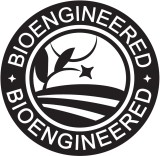
  2. Disclosure Via SymbolRegulated entities seeking to use a symbol may use a black and white or color version of the following, which includes the word “bioengineered” in an effort to provide more information to consumers in a way that is appropriate and non-disparaging:
  1. Disclosure Via Electronic/Digital LinkRegulated entities choosing to disclose BE content using the electronic or digital link option must accompany the link with the statement “Scan here for more food information” (or equivalent language that reflects technological changes) along with a telephone number and clear calling instructions, i.e., “Call [1-000-000-0000] for more food information,” in close proximity to the link. The telephone disclosure must be available at all times of the day and clearly provide BE food information to the caller. Prerecorded information is permitted. The electronic or digital link must provide the bioengineering disclosure on the first product information page accessed through the link, without any marketing and promotional information.
  2. Disclosure Via Text MessageRegulated entities that choose this option are required to include a statement on the package that instructs consumers on how to receive a text message. Those instructions can be shared or centralized among regulated entities, if so desired. Industry is not prohibited from developing a standardized instruction or response if it is in compliance with the NBFDS regulations.
The rule also provides options for disclosure in certain special cases:
  1. Additional Disclosure Options for Small Food ManufacturersAMS provides small food manufacturers, defined as a “food manufacturer with annual receipts of at least $2,500,000 but less than $10,000,000,” with two additional disclosure options for the product label: (1) a telephone number accompanied by appropriate language, e.g., “Call [1-000-000-0000] for more food information”; or (2) an Internet website address, e.g., a URL, with accompanying text, e.g., “Visit [URL of the website] for more food information.”
  2. Additional Disclosure Options for Small and Very Small Packages. For small and very small packages, defined using FDA’s labeling requirements, regulated entities can replace the statement “Scan here for more food information” associated with a link disclosure with the statement “Scan for info.” For the text message, entities can replace the statement “Text [number] for more bioengineered food information” with “Text [number] for info.” For very small packages, regulated entities may use a label’s preexisting URL or telephone number for disclosure.
  3. Disclosure for Food Sold in Bulk ContainersAMS holds retailers responsible for complying with the BE food disclosure for bulk food. The disclosure must appear on signage or other materials (stickers, bindings, etc.) on or near the bulk item. Entities can use any of the options for disclosure including text, symbol, electronic or digital link, or text message (if applicable).
In response to a comment requesting an alternative website disclosure option, AMS indicated that, while it does not have the authority to require such a disclosure, regulated entities are free to include BE disclosures on their websites.
Voluntary Disclosure
AMS agrees that voluntary BE disclosure is permissible under the Act, and the rule makes voluntary disclosure available to exempt entities and to foods in which rDNA material is not detectable but which are derived from BE crops or foods.
Entities that are otherwise exempt from the requirements of the NBFDS (very small food manufacturers, and restaurants and similar retail food establishments) may voluntarily provide disclosure of BE food that would otherwise be subject to disclosure under the NBFDS. In order to provide consistency with mandatory disclosure requirements and avoid consumer confusion, voluntary disclosure must be in one or more of the forms specified in the rule for mandatory disclosure (i.e., text, symbol, digital or electronic link, text message, or appropriate small manufacturer and small or very small package disclosure options, as applicable).
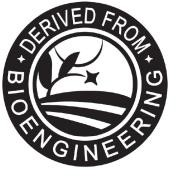
For those foods or food ingredients that (A) do not meet the definition of “bioengineered food,” (B) are not exempt from disclosure under the rule, and (C) are derived from a food on the List (described in Part 1), regulated entities may disclose such foods with one of the BE disclosure options described in the rule (text, symbol, electronic or digital link, text message, or appropriate small manufacturer and small or very small package disclosure options, as applicable). Such voluntary disclosures must state either that the food is “derived from bioengineering” or contains “ingredient(s) derived from a bioengineered source,” although “ingredient” may be replaced with the name of the specific BE crop or ingredient or may use the designated voluntary disclosure symbol.
Voluntary BE disclosure is prohibited for foods that are exempt from mandatory disclosure. For example, a regulated entity could not voluntarily disclose BE content for organic foods or for foods whose BE content falls below the 5 percent inadvertent presence threshold, or for foods that are derived from animals fed BE feed (and are not otherwise subject to disclosure).
Absence Claims
AMS received a number of comments with respect to claims regarding the absence of bioengineering in food. In response, AMS notes that while the NBFDS covers mandatory and voluntary BE and BE-derived claims, the Act does not provide authority for AMS to establish an absence claims regime as part of the NBFDS. AMS also notes that FDA and, for certain products, USDA’s Food Safety Inspection Service retain authority over absence claims and that “[e]ntities seeking to use absence claims should ensure that such claims are in compliance with all applicable Federal laws and regulations and are otherwise truthful and not misleading.” Finally, while foods certified under the National Organic Program are exempt from the BE disclosure requirement, AMS states that the Act does not give the Agency the “authority to establish or align the NBFDS with a non-GMO label.”
AMS acknowledges that entities may participate in voluntary labeling initiatives such as the non-GMO Project so long as they are in compliance with all applicable Federal laws and regulations. To the degree possible, USDA has tried to minimize the impact the NBFDS will have on these voluntary absence claims. AMS acknowledges that some elements of the NBFDS may differ from requirements of some existing voluntary marketing claims. The Agency also notes that it has adopted the statutory definition of “bioengineering,” thereby exempting from disclosure foods such as refined products that have undergone processes that remove modified genetic material.
Other Claims
AMS repeatedly states that nothing in the rule prohibits regulated entities from providing additional statements or other claims regarding BE foods and BE food ingredients provided such statements are consistent with all applicable laws and regulations.
Recordkeeping
The rule provides regulated entities with significant flexibility with respect to recordkeeping, requiring maintenance of records that are “customary or reasonable” to demonstrate compliance. Such entities must maintain records for at least two years beyond the date the product is sold or distributed for retail sale. Entities must respond to AMS requests for records by providing records within five (5) business days of the request, unless AMS extends the deadline. AMS will provide prior notice of at least three (3) business days in advance of on-site inspections. Entities must provide AMS access to facilities necessary for records examinations.
Enforcement
The rule provides a process for any interested person with knowledge of a possible violation to file a statement or complaint with AMS. AMS may enforce compliance through an investigation that includes records audits and examinations or similar activity, either on its own initiative or in response to a complaint from a third party. If the entity that is the subject of such an investigation objects to any findings made by AMS, it may request a hearing in accordance with the rule. If the entity subject to the investigation does not request a hearing, or at the conclusion of a hearing and any subsequent revision of the findings made by AMS, the Agency will make the summary of the final results of the investigation public. The decision to make that summary public constitutes final agency action for purposes of judicial review. AMS does not have authority to issue civil penalties for violations.
The published version of the final rule and preamble (63 pages) can be accessed here:
About The Author:
Karen Ellis Carr is a partner at Arent Fox. She focuses her food and agriculture practice on regulatory counseling and litigation related to products regulated by USDA, EPA, and FDA. Carr works on issues related to biotechnology and other agricultural technologies, pesticides, food safety, advertising, and labeling, and environmental law. In addition to her work with individual companies, Carr has represented a number of industry associations on development and coordination of regulatory strategy, in litigation, and on federal and state legislative issues. She has first- and second-chaired matters in state and federal trial and appellate courts throughout the country and in arbitration and mediation, and has experience in all phases of litigation from pre-litigation strategy and counseling to settlement negotiation and appeals.