19/05/2021

Where are you from: The EU-China Agreement on Geographical Indications


Recently published in the World Trademark Review, Susan Fan uncovers the effects of the EU-China Agreement on Geographical Indications.

Introduction

On 1 March 2021, the AGREEMENT BETWEEN THE GOVERNMENT OF THE PEOPLE'S REPUBLIC OF CHINA AND THE EUROPEAN UNION ON COOPERATION ON, AND PROTECTION OF, GEOGRAPHICAL INDICATIONS (“the EU-China GIs Agreement”) came into effect. The EU-China GIs Agreement protects around 200 iconic European and Chinese goods against imitation and misuse, recognizing 100 Geographical Indications (“GI”) each from the European Union and China, with a second batch to follow that will include an additional 175 GIs each from the EU and China within four years. Now in force, the EU-China GIs Agreement will further strengthen the trade and economic cooperation between the EU and China and benefit consumers and enterprises on both sides. This article will explore what geographical indications are, the effect of the EU-China GIs Agreement and how GIs are obtained and protected.

What are Geographical Indications?

The GI system is a special product quality control system and an intellectual property protection system adopted for famous, excellent, and special products with distinctive regional characteristics. The “origin” refers to the specific geographic region of a particular country where a special product is produced, the geographical features and cultural characteristics of the specific geographic region, such as the water, soil, climate, production history, etc., will directly determine or affect the quality, characteristics, or reputation of the product. Such special product is named after the specific geographic region, such as “Anji White Tea” from China or “Parma Ham” from Europe.

Effect of the EU-China GIs Agreement

Both the EU and China have numerous products that are protectable as GIs. For rights holders from the EU, the entry into force of the EU-China GIs Agreement offers an additional way to protect their specialty products.

For example, “Prosciutto di Parma”, also known as “Parma Ham”, is exclusively reserved to hams produced according to the strict rules defined by the Consorzio’s specifications and based in its place of origin, Parma of Italy. After the EU-China GIs Agreement, in addition to the protection afforded as a Protected Designation of Origin (“PDO”) in the European Community, the genuine Parma Ham shall also receive protection in China under the Agreement as an established GI in the EU.

Accordingly, for those products which do not come from Parma, or those that do not meet the conditions of Parma Ham, but are advertised as “Prosciutto di Parma” or even accompanied by expressions such as “kind", "type", "style", "imitation" or the like[1], seeking recourse afforded to GI in China shall be available, rather than relying solely on making complaints and enforcing rights under the grounds of false advertising or unfair competition.

Similar protection is also offered to rights holders of Chinese specialty products. Using “Anji White Tea” as an example, after its GI is protected in the European market, the GI cannot be used on such teas if they are not produced in accordance with the “Anji White Tea” GI rules. Moreover, the GIs listed in the EU-China GIs Agreement by China not only cover alcoholic beverages, tea, agricultural products, food, etc., but also products with Chinese characteristics, such as rice paper and Shu brocade, which represent traditional Chinese culture. This is the first time that the EU has included such GIs in its agreement. Previously, the EU’s agreements on GIs signed with foreign countries only cover agricultural products, food, and alcoholic beverages. It can be said that products with GIs not only help build unique brands and bring great economic benefits but also play a considerable role in the protection of the traditional cultural heritage of specific geographic regions.


How are GIs Obtained and Protected?

According to the statistics from the China National Intellectual Property Administration (“CNIPA”), in 2020, 10 applications for the protection of GI products were accepted, 6 GI products were approved, 1,052 enterprises were approved for using special marks of GIs, and 765 GI trademarks were approved for registration. As at the end of 2020, a total of 2,391 GI products were approved, 9,479 enterprises were approved for using special marks, and an accumulated number of 6,085 GI trademarks were registered. This means that the awareness and protection of GIs are constantly evolving. In the context of the EU-China GIs Agreement, how exactly can GIs in Europe or China be protected?

In order for a GI to receive protection in other territories, it must already be established. This means that the GI should be formally recognized in its home territory, such as a Protected Designation of Origin or a Protected Geographical Indication (“PGI”) in the EU, or as a recognized GI-protected-product in China.

However, for products that have yet to be recognised as GI products, it is still necessary for them to first obtain official recognition. For a product originating from Europe that wants GI protection but not yet covered by the EU-China GIs Agreement, it needs to apply for the registration of foreign GI with the State Administration for Market Regulation or the competent department of the Ministry of Agriculture in China, or to register the name of the GI as a Collective Trademark/Certification Trademark. In China, there are currently three government departments in charge of the registration and management of GIs. The Trademark Office of the CNIPA is responsible for registering and managing the GIs as Collective Trademarks or Certification Trademarks; the State Administration for Market Regulation and the Ministry of Agriculture are responsible for protecting and managing the GIs registered with them. It is worth mentioning that since the GIs registered with the Trademark Office of the CNIPA have legal status as trademarks, this kind of protection for GI products is much stronger and more easily enforced.

If a name of geographical indication is not a registered GI or protected as a Collective Trademark/Certification Trademark, does the rights holder have any recourse? The answer is “yes”. For example, in the case of Comité Interprofessionnel du Vin de Champagne v. Beijing Sheng Yan Yi Mei Trading Co., Ltd. regarding the infringement of the GI and unfair competition, the soft drink named “Seven Star Red Grape Champagne” sold by Beijing Sheng Yan Yi Mei Trading Co., Ltd. was prominently marked with the words “香槟 (Champagne in Chinese)” and “CHAMPAGNE”. Although at the time of the filing of the lawsuit, “Champagne” had not yet been registered as a GI product or a Collective Trademark/Certification Trademark in China, the court held that whether the GI has been registered as a Collective Trademark or Certification Trademark in China should not be a necessary condition for its legal protection in China. Given that the name “Champagne (香槟)” can serve as an indication of the specific origin of the product, it should be legally protected as a GI on sparkling wines in China. Therefore, the Chinese court supported the Plaintiff’s claim and prohibited the Defendant from using the GI of “Champagne”.

Nevertheless, to avoid the expense of court litigation, the most effective mechanism for protecting products of specific geographic origin would still be the registration system, that is, achieving legal certainty by obtaining recognition of GI products from the Chinese authorities.  In addition, it is possible to further obtain extended protection through the EU-China GIs Agreement. If a GI is not registered in China, it is still possible to gain legal protection, but the evidentiary requirements and the uncertainty will be relatively high. Given the challenges in China, it is advisable for GI owners to adopt a more robust IP protection strategy to seek additional rights.


18/05/2021

Champagne protection remains strong


Introduction

The protection of geographical indications is of great relevance in Europe, especially in France. In the past few decades, the internationalisation of the agrifood and wine markets has increased the importance of IP rights and the preservation of traditional knowledge.


In France, the National Institute of Origin and Quality (INAO) is the public administrative institution responsible for the implementation of French policy regarding official signs of identification of the origin and quality of agricultural and food products.

Nearly half of the 1,100 products protected by an official sign in France are wines.

History of protection for Champagne

Champagne was one of the first wine-growing areas to seek a protected geographical status. On 29 June 1936 it was recognised as a controlled designation of origin (the French equivalent of a protected designation of origin (PDO)). From this date, Champagne houses have been fighting to protect their name and reputation.

The Champagne Committee is the trade association that represents the interests of independent Champagne producers and houses. One of its duties is to protect consumers against misleading claims regarding any wines, beverages or products that trade off Champagne's reputation as an appellation of guaranteed origin and quality. As legal entities, the INAO and the Champagne Committee may bring actions before the courts and prosecute any party which misappropriates the reputation or identity of the Champagne appellation.

Due to Champagne's fame, its unfair use is not confined to the trade of wines and alcoholic beverages, as evidenced by the large number of cases that the Champagne Committee has brought and won, including the following:

  • 1984 – against 'Champagne' cigarettes in France;
  • 1987 – against Perrier mineral water in Germany;
  • 1990 – against 'Schaumpagner' Paris-Night bubble bath in Switzerland;
  • 1993 – against 'Champagne' Yves Saint Laurent perfume in France;
  • 1994 – against elderflower 'Champagne' in Great Britain; and
  • 2002 – against the use of the phrase "Arla: the yoghurt with the taste of Champagne" in Sweden.

CHAMPAWS case

A recent case exemplifies the hard work of the INAO and the Champagne Committee to protect the reputation of the Champagne appellation. On 21 December 2020 the Opposition Division of the EU Intellectual Property Office (EUIPO) rejected the registration of the trademark CHAMPAWS on the grounds that it evoked the PDO Champagne.

Facts

On 4 July 2019 the British company Wood and Brew Ltd, which specialised in the commercialisation of pet beverages, filed the international trademark CHAMPAWS, designating the European Union.

The Champagne Committee and the INAO filed an opposition against the trademark application before the EUIPO, based on the prior PDO Champagne – specifically, on Article 103(2)(b) of EU Regulation 1308/2013/EU, according to which PDOs are protected against misuse, imitation or evocation – and its outstanding reputation and prestige.

Decision

In its decision, the EUIPO pointed out that the concept of 'evocation' covers, among other things, a situation in which the term used to designate a product incorporates part of a protected designation, so that when the consumer is confronted with the name of the product, the image triggered in their mind is one of the product whose designation is protected.

To characterise the evocation of a registered PDO, it is irrelevant whether the goods are similar or whether a likelihood of confusion may arise. Instead, it is necessary to establish a "sufficiently clear and direct" link between the term used to designate the product and the product whose name is protected.

To evaluate such link, all relevant factors of the case should be considered, including a comparison of the goods and the signs. The EUIPO found that "a certain proximity [could not] be denied" between the wines and the contested goods (ie, beverages for pets and goods under the broader category of foodstuffs for pets, including beverages). The EUIPO found that this link was reinforced by:

  • the message which accompanied the marketing of the contested goods, which referred to intrinsic characteristics of Champagne wines (eg, bubbles); and
  • the outstanding reputation and prestige of the PDO Champagne.

Further, the signs had the same first six letters, 'champa', which resulted in an overall similarity between them.

The EUIPO also considered the applicant's intention. The EUIPO recognised that the applicant's marketing strategy was built on an evocation between the contested goods and Champagne wines. To promote its goods, the applicant clearly used the images of prestige, luxury, festivities and glamour of Champagne wines, which result not only from the intrinsic reputation of their quality but also from the efforts invested to create them.

Therefore, the EUIPO held that the sign CHAMPAWS was a clear and direct evocation of the PDO Champagne and should be denied protection.

Similar cases

This decision follows an EUIPO Board of Appeal decision which cancelled an EUIPO Opposition Division decision and allowed an opposition filed against an application for the trademark CHAMPAGNOLA, which was also based on the evocation of the PDO Champagne. The EUIPO Opposition Division had rejected the opposition on the grounds that the goods designated by the contested trademark (ie, breads and pastry in Class 30 and bakery services and services related thereto in Class 40) were dissimilar to Champagne (Champagnola/Champagne, 17 April 2020, R 1132/2019-4).

In another current case, the European Court of Justice is expected to issue a ruling concerning the use of Champanillo as a business name for restaurants. Such ruling may consolidate the concept of evocation.

Comment

This case reflects the quasi-absolute protection granted to PDOs by the EUIPO and the offices of member states, particularly where such PDOs enjoy an intrinsic reputation, as is the case with the PDO Champagne.


Anne-Laure Bedaux

GEVERS 

17/05/2021

USA - Amazon’s New Compliance Requirements for Dietary Supplement Listings to Ensure Greater Transparency and Quality for Consumers


As one of the largest channels facilitating the purchase and sale of dietary supplements, Amazon has often faced criticism for its lack of oversight and failure to take action to restrict the sale of supplements on its platform which are illegal, misbranded, adulterated, or otherwise dangerous for consumers. In response, Amazon recently updated its dietary supplement policy to impose additional obligations on dietary supplement sellers to ensure that products marketed on its platform are safe for consumers and are manufactured and labeled in compliance with Food & Drug Administration (“FDA”) regulations.

While Amazon’s existing policy requires that any dietary supplements listed on its platform conform to certain parameters (for example, no products may be listed which have been identified in an FDA Warning Letter as adulterated or misbranded), the new policy places affirmative reporting obligations on sellers. Specifically, the new policy requires that for each dietary supplement product, manufacturers must submit for Amazon’s approval: (i) either a Certificate of Analysis (COA) from an ISO/EIC 17025 accredited laboratory, a COA from an in-house laboratory that is compliant with current good manufacturing practices (“cGMPs”), or evidence of product enrollment in an Independent Quality Certification Program such as NSF Certified for Sport®, BSCG Certified Drug Free®, or the USP Dietary Supplement Verification Program; and (ii) product images which clearly show the entirety of the product label and contain the name and contact information of the brand owner or manufacturer. The COA requirement applies to finished dietary supplement products, with additional obligations for herbal supplements. For example, for herbal supplements which declare quantified plant constituents on their Supplement Facts panel, COAs must be submitted for each dietary ingredient.

The new policy also requires dietary supplement sellers to provide Amazon with a Letter of Guarantee issued on official brand letterhead providing assurances that (i) the product was manufactured under cGMPs, (ii) only lawful and safe ingredients are utilized in the product, and (iii) the concentration of active ingredients as stated on the label is safe for consumption. These new obligations apply to both new product listings as well as existing products which have already been listed for sale on Amazon, with a compliance deadline of May 31, 2021 for existing product listings. Accordingly, any sellers with existing dietary supplement product listings must submit the required documentation and obtain approval of their listings by May 31, 2021. The stated penalties for failure to provide the newly required information include removal of product listings, suspension of the seller’s ability to add new products or list products, a withholding of payments due to the seller, and/or potential additional legal action.

It is therefore especially critical that dietary supplement brands selling on Amazon are promptly taking steps to comply with the new policy and properly managing their quality obligations to ensure that their products are being manufactured in accordance with cGMPs, and are strongly advised to have detailed agreements in place with manufacturers which clearly spell out their respective quality and compliance responsibilities.


11/05/2021

"More than a wine label when prestige is at stake"

 By François Willems

Prestigious wineries' trademarks affected by greed

In recent years the market for sale and the value of grands crus wines has increased significantly. For example, the names of Bordeaux wine domains (eg, Château Petrus, Château Latour, Château Lafite-Rothschild, Château Mouton Rothschild and Château Margaux) are among the most prized wines in the world.

As with the art market, speculation on wines attracts counterfeiters who hope to capture some of the huge profits that the resale of such wines generates each year. A common practice of such counterfeiters is to obtain genuine empty bottles and labels of well-known wines and refill them with a mixture of inferior grape juices in the hope of selling them at a high price to gullible buyers.

As well as misleading buyers about the authenticity and origin of wines, this practice undermines the brand prestige of the affected wineries. It diminishes the feeling of scarcity that brand owners who produce only a limited number of hectolitres per vintage skilfully maintain.

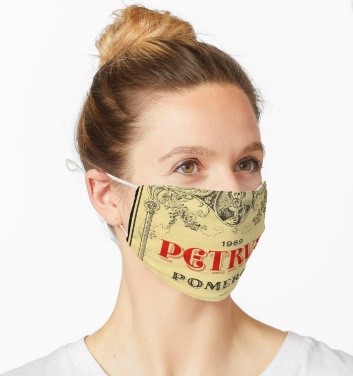
Evidently, such counterfeit wines are problematic for Bordeaux domains. However, this is not the only type of brand infringement with which renowned French wineries must deal. Sometimes, simply putting prestigious brands on everyday objects enables counterfeiters to sell their products at a higher price. As a result of the COVID-19 pandemic, face masks are the new canvas for trademark misappropriation (Figure 1).

A recent Belgian court decision addresses free riding on the prestige of a well-known trademark.

Figure 1: example of a mask which misappropriates the PETRUS trademark

Wine labels for unlawful decorative purposes

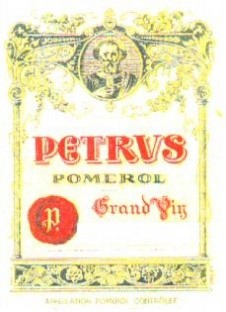
On 6 January 2021 the Tribunal of First Instance (correctional) of Hainaut, Charleroi division rendered a decision (Petrus v X (19C000951)) regarding infringement of the well-known figurative trademark PETRUS (Figure 2).

Figure 2: PETRUS trademark

Facts

The case concerned the interception of a person in possession of more than 3,000 Château Petrus wine labels at Gosselies Airport, Charleroi. The defendant admitted that the labels were counterfeit. He even stated that he had aged the labels with blackcurrant juice to match the labels' visual appearance to their alleged vintage date. However, he did not consider that he was infringing Petrus's rights because the labels were intended to decorate wine bars and not to be affixed to bottles.

Decision

The Charleroi tribunal replied that the defendant's reasoning was erroneous. As the infringed figurative mark was a reputed trademark, its use could be prohibited even for goods other than those designated (eg, decorative objects). The issue was that the defendant had intended to take undue advantage of the trademark's repute and distinctive power as the labels were acquired with the aim of reselling decorative objects which bore such labels at a high price. The infringement of counterfeiting was therefore established.

With this decision, the Charleroi tribunal reaffirmed that trademark counterfeiting damages the prestige and reputation of the affected trademark. In this case, the counterfeit objects were not sold so Petrus did not suffer any material damage. However, the case may have caused moral damages.

One of the interesting points in this case was the calculation of compensation. The Charleroi tribunal considered that each counterfeit label further damaged the exclusive and rare character of the PETRUS mark. Therefore, the moral damage was compensated with a flat rate of €10 per infringing product.

Comment

Establishing a reputation for a trademark is a long and costly process. When a trademark achieves this status, as in the case of the Bordeaux wineries, its owner can claim a broader protection which extends to goods and services not designated by their trademark registrations. Although the owner of such a renowned trademark obtains wider protection, the downside of such recognition is that such trademarks are more likely to be the target of parasitism and unauthorised use by unscrupulous infringers.

Source: Gevers

"Catalonia High Court of Justice confirms grant of DYNAMIC SANTIVERI trademark" by Paula Gutiérrez


On 23 February 2021 the Fifth Section of the Contentious-Administrative Chamber of the Catalonia High Court of Justice (CHCJ) dismissed a contentious-administrative appeal filed by Laboratorios ERN SA, thus confirming the grant of Spanish Trademark 3,717,283, DYNAMIC SANTIVERI.

Facts

Casa Santiveri SL was a company principally dedicated to the production of health food preparations. On 4 May 2018 it applied to register Spanish Trademark 3,717,283, DYNAMIC SANTIVERI (a word mark), for goods in Class 5 of the Nice Classification – specifically, "food supplements based on collagen, hyaluronic acid, vitamins, minerals and plants".

Laboratorios ERN, a manufacturer of pharmaceutical products, filed an opposition against such trademark, alleging that it was prohibited under Article 6(1)(b) of the Trademark Act (17/2001) because it was incompatible with Laboratorios ERN's priority Spanish Trademark 0020,631, DYNAMIN (a mixed mark), which was registered for:

  • "specific and chemical products" (under Class 1 of the Nice Classification); and
  • "specific and pharmaceutical products, dietetic food products of a medicinal nature in any form of presentation" (under Class 5 of the Nice Classification).

SPTO decision

On 20 November 2018 the Spanish Patent and Trademark Office (SPTO) rejected Laboratorios ERN's opposition and granted the DYNAMIC SANTIVERI trademark, considering that Article 6(1)(b) of the Trademark Act did not apply due to the word differences between the trademarks.

On 11 December 2018 Laboratorios ERN filed an appeal against the SPTO decision. On 10 May 2019 the SPTO dismissed the appeal, thereby confirming the decision.

Laboratorios ERN filed a contentious-administrative appeal before the CHCJ.

CHCJ decision

On 23 February 2021 the CHCJ resolved the dispute by confirming that Article 6(1)(b) of the Trademark Act did not apply to the case.

According to the court, Article 6(1)(b) of the Trademark Act prevents the registration of a trademark where the signs and goods or services are similar to those of a prior trademark (ie, where there is a likelihood of confusion or association).

Based on Supreme Court case law, the court stated that a likelihood of confusion must be analysed by considering:

  • the signs' distinctive and dominant elements;
  • the signs' identity or similarity;
  • the identity of the goods or services;
  • the degree of knowledge of the trademark in the market; and
  • the association that may be made with the registered sign.

The court also considered EU case law, which states that a comparison must consider the sign as a whole, without excluding the fact that a combined trademark may be dominated by one of its elements.

Accordingly, the court considered that Article 6(1)(b) of the Trademark Act was not applicable for the following reasons:

  • Even though the trademark DYNAMIC SANTIVERI was similar to the trademark DYNAMIN in its initial word, the final letter was different.
  • The first term, 'dynamic', evoked the Spanish word 'dinámico' (ie, 'dynamic') and appeared as accessory or complementary to the main term of the DYNAMIC SANTIVERI trademark, 'Santiveri', which was sufficiently distinctive with respect to the opposing trademark.
  • Although the scope of application of both trademarks was Class 5, the trademark DYNAMIC SANTIVERI had its own overall distinctiveness, enabling both trademarks to coexist in the market with no risk of confusion. Such risk had to be analysed from a rational and logical perspective, considering the public's average level of cultural knowledge.

Therefore, the CHCJ dismissed Laboratorios ERN's appeal, confirming the grant of the DYNAMIC SANTIVERI trademark because sufficient denominative and applicative differences existed between the two trademarks to avoid any likelihood of confusion in the mind of a general consumer.

The plaintiff was ordered to pay the legal costs. This decision is final.


Source: internationallawoffice/com.Newsletters-Intellectual/Property-Spain.Grau-Angulo

03/05/2021

UK: Tesco fined for selling out of date food


Tesco has been fined £7.5M after pleading guilty to selling food past its use by date at three of its Birmingham stores.

Birmingham City Council brought the prosecution against Tesco under the Food Safety and Hygiene (England) Regulations 2013, after food inspectors from the Environmental Health Department found three stores in and around Birmingham selling out-of-date food on numerous occasions between 2015 and 2017.

Tesco pleaded guilty at Birmingham Magistrates court to 22 offences across the three stores, which totalled 67 separate out of date items, leading to the handing down of one of the most substantial fines ever for an offence of this nature. The court heard that officers first visited stores in June 2015 after receiving a complaint from a member of the public and found 6 items on display beyond their use by date. Officers were invited to complete another check in April 2016 and found various further out of date items on display, including pork belly and flavoured milk. Then, visits to 2 other stores after a subsequent complaint found several additional offending items, including fruit with visible mould.

A spokesperson for Birmingham City Council's environmental health team said: "the purpose of the use-by date is to protect the health of the consumer. The manufacturers put the date on their products to guarantee the food is safe and ignoring this date completely undermines consumer safety".

Tesco's fate sends a warning to other food retailers to ensure that appropriate steps are taken to guarantee that their products are in date. The message is clear; when it comes to consumer safety there is no room for error and fines can be hefty.


Ciara Cullen and Ben Mark

Source: https://www.rpc.co.uk/perspectives/food-and-drink/rpc-bites-30/#